For most organizations, attribution stops the moment a lead enters the CRM. The campaign gets credit updates and the optimization decisions move forward. But what happens after that lead is captured – qualification, calls, follow-ups, sales conversations, and eventual revenue – often disappears from the attribution picture.
This gap is known as post-lead attribution, and it’s one of the most overlooked – yet most impactful – layers in modern marketing measurement.
In a world of longer buying journeys, multiple touchpoints, offline conversions, and privacy restrictions, stopping attribution at the lead is no longer enough.
Jump ahead to:
What Is Post-Lead Attribution?
Post-lead attribution refers to the process of tracking and attributing value to marketing efforts beyond lead capture, all the way through meaningful business outcomes such as:
- Lead qualification (MQL / SQL)
- Sales conversations and call outcomes
- Opportunity creation
- Closed revenue
- Customer lifetime value
Traditional attribution models focus on where the lead came from.
Post-lead attribution focuses on what that lead became.
The Attribution Gap in Most Marketing Stacks
Despite widespread awareness of attribution, most companies still rely on incomplete models.
- 91% of marketers say attribution is important, yet only 31% are very confident in their attribution accuracy
- Only 57% of organisations use any attribution model at all
- Nearly 38% of marketers cite attribution as their biggest analytics challenge
- 22% still rely solely on last-click attribution, source.
These numbers reveal a deeper issue: even when attribution exists, it’s often shallow and incomplete.
Most stacks are built around ad platforms and analytics tools that excel at tracking clicks and form fills – but struggle to connect that data with CRM pipelines, calls, WhatsApp conversations, or offline sales.
As a result, teams end up optimizing for lead volume instead of lead value.
Why Traditional Attribution Fails
Classic models like first-click or last-click fail to account for the full customer journey. For example:
- First-click attribution credits the initial interaction, ignoring what convinced the lead to convert.
- Last-click attribution credits only the final touchpoint before conversion, ignoring earlier interactions that built awareness and preference.
- Even multi-touch models distribute credit across touchpoints but typically stop before the sale closes.
In practice, many buyers engage with multiple content pieces, interact with sales reps, and require nurturing before turning into revenue. Ignoring what happens after the lead is recorded distorts how you value channels.
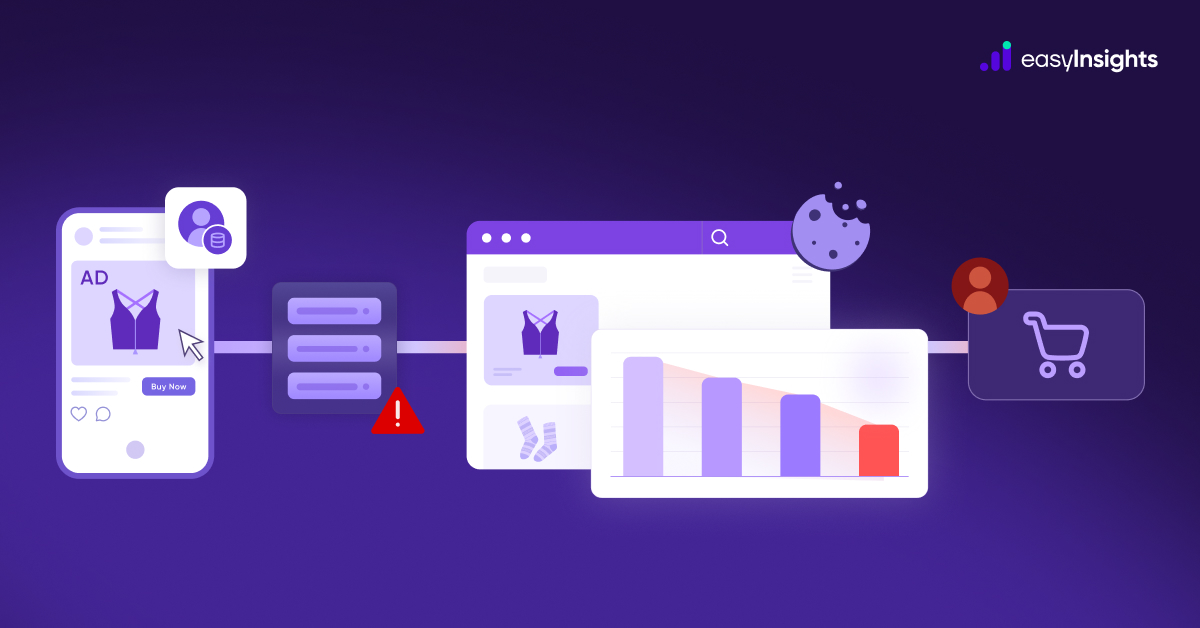
Moreover, emerging challenges like privacy restrictions and cookie deprecation continue to erode the depth of traditional tracking – pushing marketers to invest in causally-driven, revenue-centric attribution strategies instead.
The Importance of Tracking Post-Lead Impact
Post-lead attribution bridges the gap between lead generation and business outcomes. It answers questions such as:
– Did this channel generate high-quality, sales-ready leads?
– Which campaigns influenced closed revenue, not just form fills?
– Which interactions predict higher customer lifetime value?
– How do nurturing activities impact the lead-to-opportunity conversion rate?
Instead of optimizing for superficial “form fills,” teams start optimizing for what matters:
1. Lead Quality Over Volume
A lead that turns into a paying customer delivers far more value than one that never converts. Post-lead attribution helps separate cheap leads from profitable ones, empowering smarter budgeting and targeting.
2. Better Sales & Marketing Alignment
By tying marketing activity directly to conversion rates and opportunities, marketing and sales teams share a unified view of performance – reducing internal friction and debate.
3. Forecast Accuracy
Traditional attribution metrics can mislead budget decisions. When models account for downstream revenue influence, forecasts become more realistic.
Real World Impact and Hard Numbers
• 74% of high-growth companies use multi-touch attribution, aligning their measurement closer to full-funnel outcomes.
• Marketers using sophisticated attribution tools.
• Despite this, many teams still under-invest in attribution – with 43% believing their attribution efforts are under-funded.
What a Post-Lead Attribution Stack Looks Like
To implement post-lead attribution effectively, teams need to connect data across the entire journey:
- Ad platforms for acquisition signals
- Web and server-side tracking for user behavior
- CRM systems for pipeline and revenue data
- Call, WhatsApp, and offline systems for real conversion signals
The goal is not more dashboards – it’s a single source of truth that connects marketing effort to business outcomes.
Role of EasyInsights in Lead Qualification & Post-Lead Attribution
- Captures Lead Quality Signals Beyond the Form
Tracks post-lead actions like call outcomes, engagement depth, follow-ups, and sales responses to assess real lead intent. - Enables Accurate Lead Grading
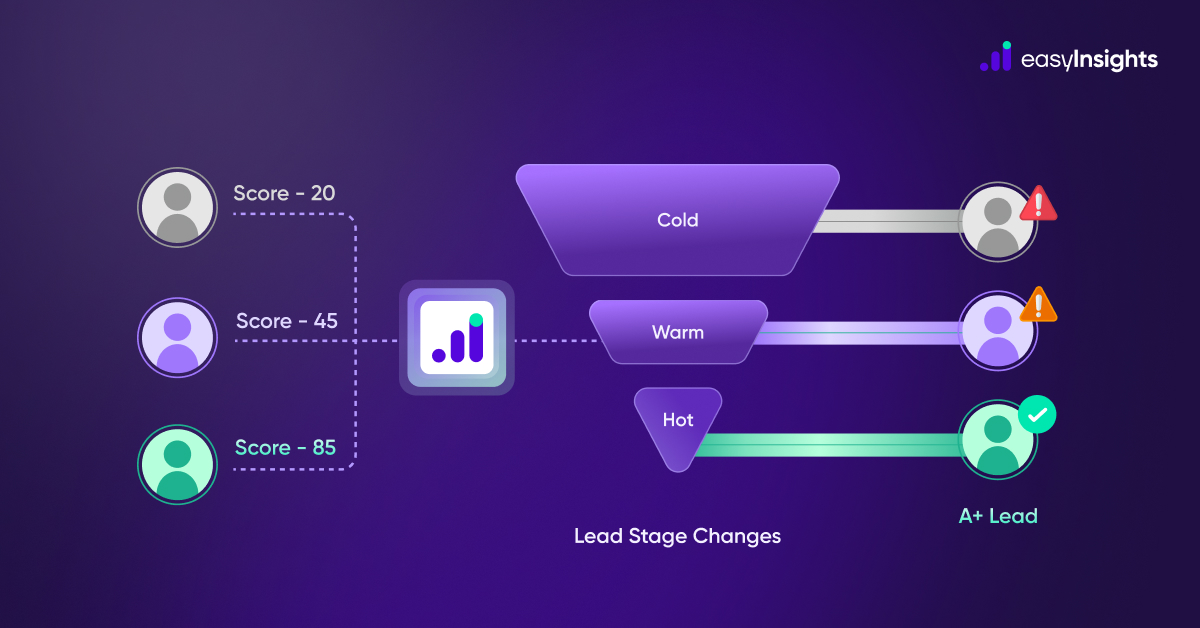
Uses downstream signals (SQL creation, call dispositions, opportunity movement) to differentiate high-intent leads from junk or low-value leads. - Connects Marketing Sources to Qualified Leads
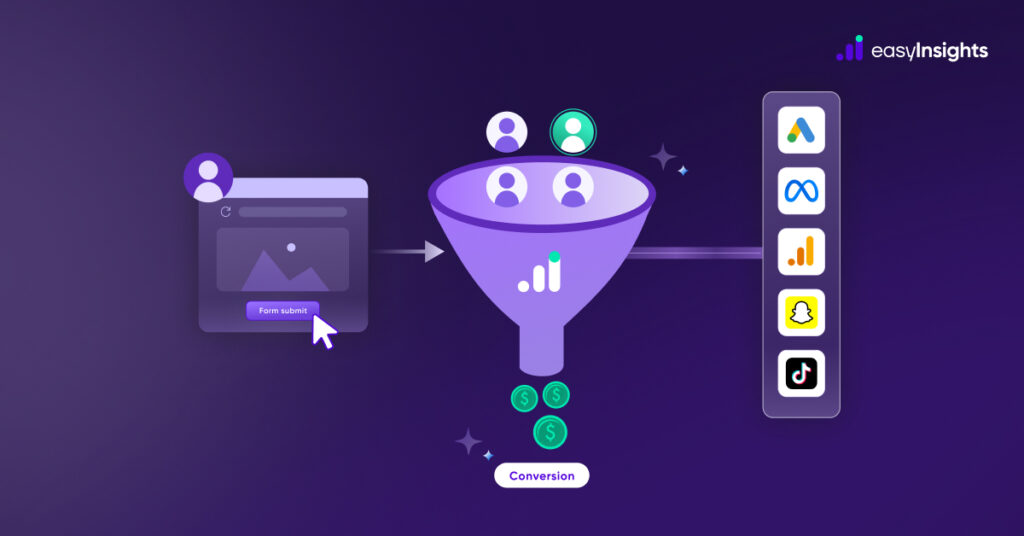
Shows which campaigns and channels consistently generate sales-ready leads – not just form submissions. - Feeds Qualification Data Back Into Ad Platforms
Sends graded lead signals back to Meta and Google to improve optimization toward higher-quality conversions. - Aligns Marketing and Sales on Lead Quality
Creates a shared, data-driven definition of a “good lead” based on outcomes, not assumptions.
Conclusion
In enterprise marketing, success is not measured by lead volume, but by qualified pipeline and revenue impact. Post-lead attribution closes the gap between marketing activity and business outcomes by revealing which efforts generate sales-ready leads and sustainable growth. Organizations that adopt this approach gain clearer visibility, stronger sales alignment, and the confidence to scale investments based on real performance – not assumptions.
Get post lead Attribution with EasyInsights – Book a demo Today!