Scaling paid ads isn’t as simple as increasing budgets anymore. CPAs are rising, tracking signals are getting weaker due to privacy changes, and platforms are becoming more complex every year. What used to work with manual change and audience adjustments now requires constant monitoring and reactive changes.
Many marketers find themselves stuck adjusting bids, budgets, creatives, and targeting every single day – trying to stabilise performance instead of truly scaling it.
But what if scaling didn’t have to be manual anymore?
In this blog, we will discuss why ad performance is becoming harder to manage, what’s causing signal loss, and how smarter, AI-driven systems can help you scale efficiently without constant manual intervention.
Jump ahead to:
What Is Task-Oriented AI?
Task-Oriented AI is a type of AI built to perform specific tasks automatically and continuously – not just analyse or report data.
Instead of only showing insights, it actively detects issues, makes decisions, takes action, and improves based on results.
What Are Autonomous Agents in Ad Scaling
Autonomous agents are AI systems built to execute specific tasks independently and continuously. Instead of manual optimisation, they monitor performance, make decisions, and take action in real time.
Research from Gartner and McKinsey & Company highlights the shift from passive analytics to AI-powered orchestration and real-time decision systems.
In ad scaling, autonomous agents work like this:
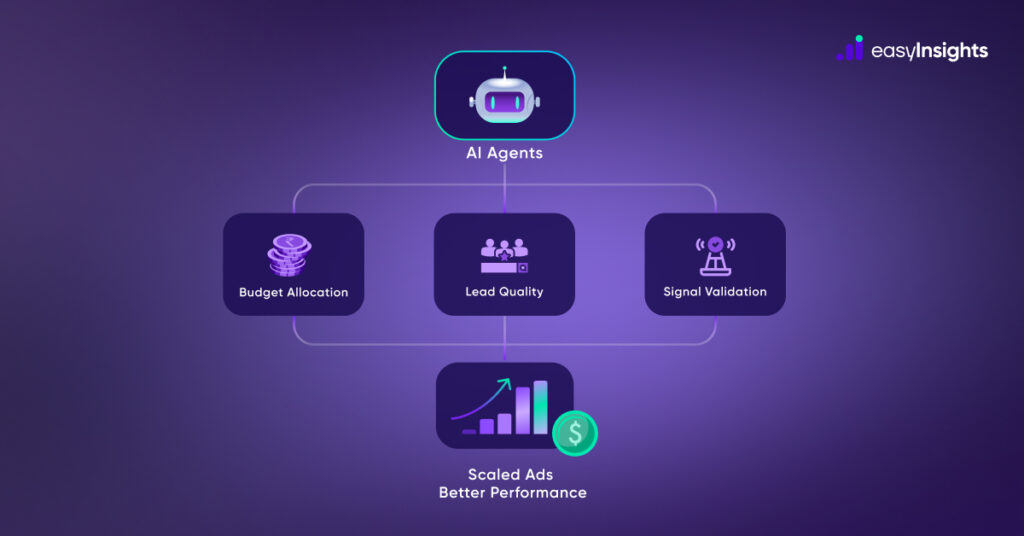
Signal Validation Agent – Ensures that conversion signals are accurate, complete, and aligned with actual business outcomes. It checks for missing events, duplication, delayed firing, and weak tracking inputs – improving optimisation quality.
Lead Quality Agent – Evaluates and scores leads based on CRM outcomes, engagement behaviour, and downstream conversions before campaigns are scaled. This prevents scaling based purely on volume and instead prioritises quality signals.
Budget Allocation Agent – Automatically shifts budget toward segments showing stronger engagement, higher qualification rates, or better post-lead behaviour.
Reactivation Agent – Identifies dormant but previously high-intent users in CRM data and triggers re-engagement campaigns automatically. This ensures valuable prospects are not lost due to inactivity.
Performance Monitoring Agent – Continuously audits campaigns for instability, signal drop, unusual conversion patterns, or learning-phase disruption. Instead of waiting for weekly reports, the agent detects issues in real time and triggers corrective action.
Also Read: What Is Lead Grading – And How AI Does It Better Than Rule-Based Scoring
How Autonomous Agents Improve Ad Scaling
Autonomous agents change how scaling works by making it smarter, faster, and outcome-focused. Instead of reacting to surface-level metrics, they continuously optimise based on deeper performance signals.
Here’s how they improve ad scaling:
Scale Based on Revenue, Not Just Volume – Agents prioritise high-quality signals and downstream outcomes, ensuring campaigns grow based on real business impact – not just lead counts.
Detect Winning Segments Earlier – By analysing behavioural and conversion patterns in real time, agents identify high-performing audiences and creative combinations faster than manual review cycles.
Prevent Waste on Low-Intent Traffic – They automatically reduce exposure to segments showing weak engagement or poor qualification signals, protecting campaign efficiency.
Optimise in Near Real-Time – Instead of waiting for weekly reports, agents continuously monitor performance and trigger adjustments instantly.
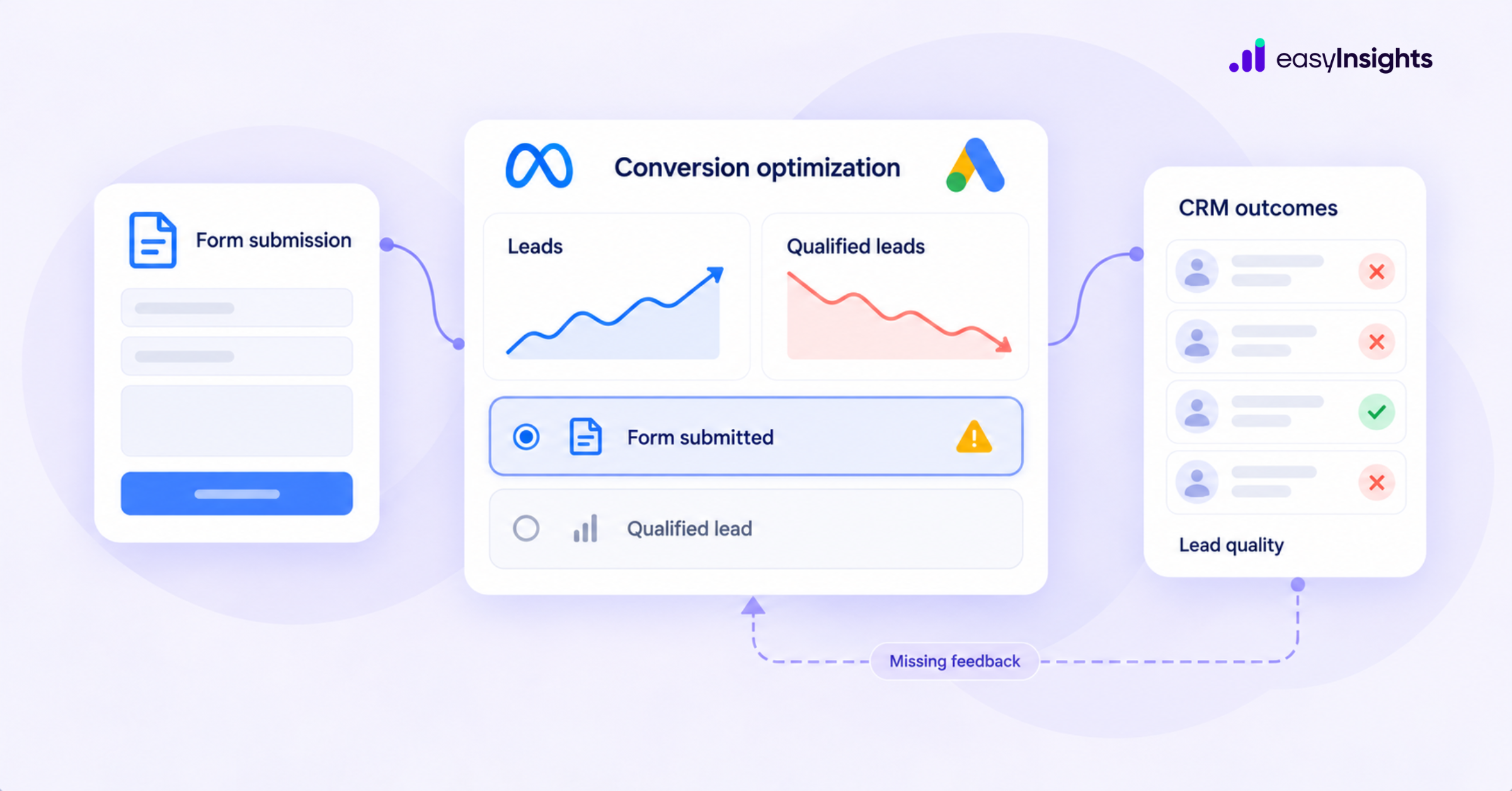
Create a Closed Feedback Loop – Autonomous systems connect ad platforms with CRM and sales data, feeding back real outcomes to improve future optimisation decisions.
Also Read: From Click to Contract: How Agentic AI Fixes the Lead Generation Funnel
Traditional Scaling vs Agentic AI Scaling
| Traditional Scaling | Agentic AI Scaling |
| Manual budget increases based on surface metrics | Automated, signal-based budget shifts driven by real-time performance data |
| Optimises for CPL | Optimises for revenue probability and downstream outcomes |
| Static audience targeting | Dynamic segment prioritisation based on behaviour and intent |
| No CRM feedback loop | Closed-loop feedback between ads and actual sales outcomes |
| Reactive adjustments after performance drops | Predictive optimisation that detects and acts before instability |
The EasyInsights Approach
EasyInsights takes a system-driven approach to ad scaling – focused on intelligence, not just automation. Here’s how it works:
- Connects CRM and marketing data to create a unified performance view
- Scores leads based on revenue probability, not just form submissions
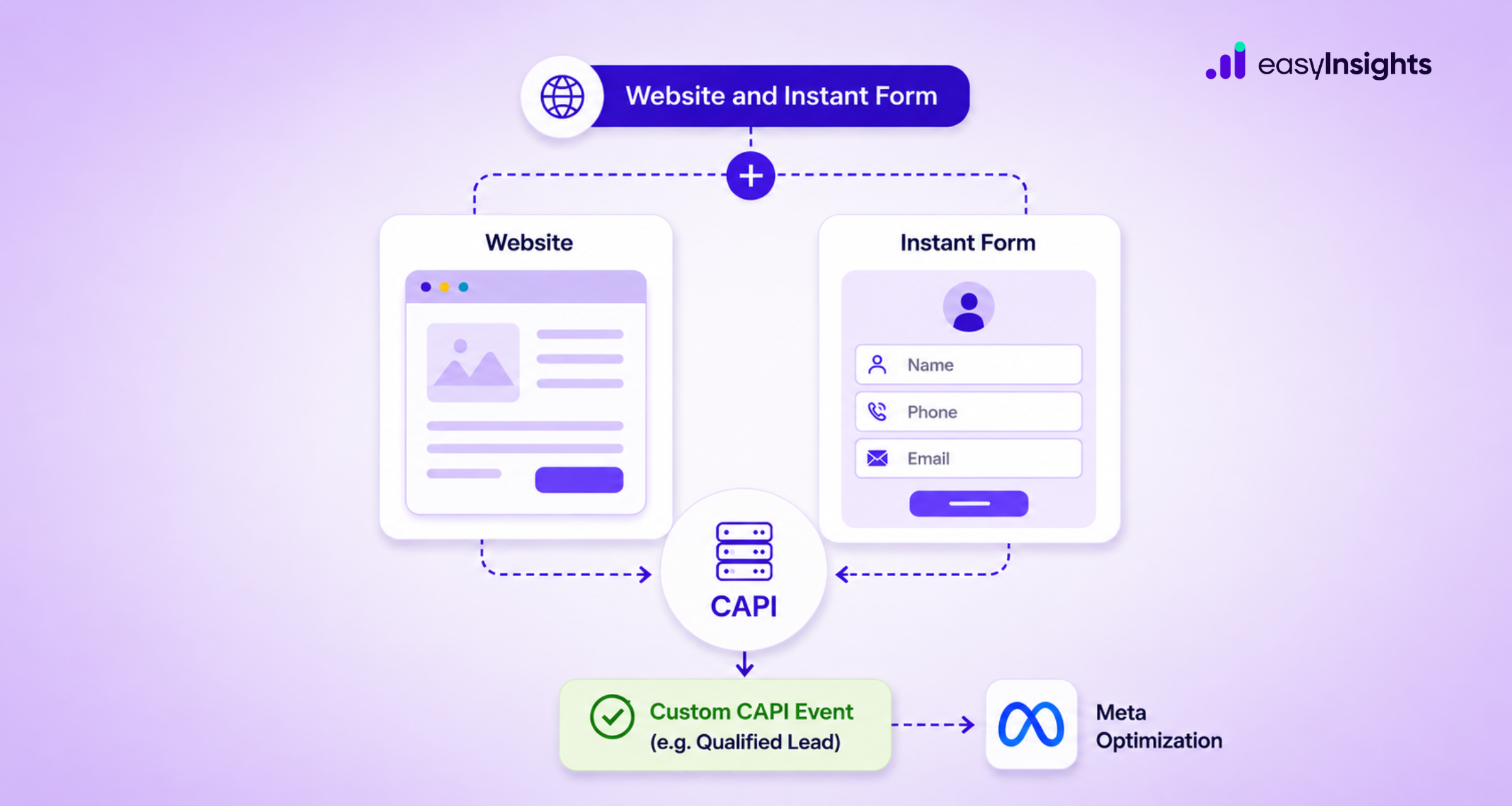
- Sends revenue-weighted signals back to ad platforms to improve optimisation quality
- Orchestrates task-based AI agents that monitor, decide, and execute continuously
- Enables smarter ad scaling through continuous learning and feedback loops
Wrapping Up
Ad scaling doesn’t fail because of creative fatigue or limited audience size.
It fails when scaling decisions are made without real revenue intelligence.
When optimisation is disconnected from actual business outcomes, growth becomes unstable and inconsistent.
Task-oriented AI changes that. It replaces manual tweaks and reactive decisions with autonomous, revenue-focused execution – transforming ad scaling from guesswork into a more predictable, systematic growth engine.
Book a demo with EasyInsights!