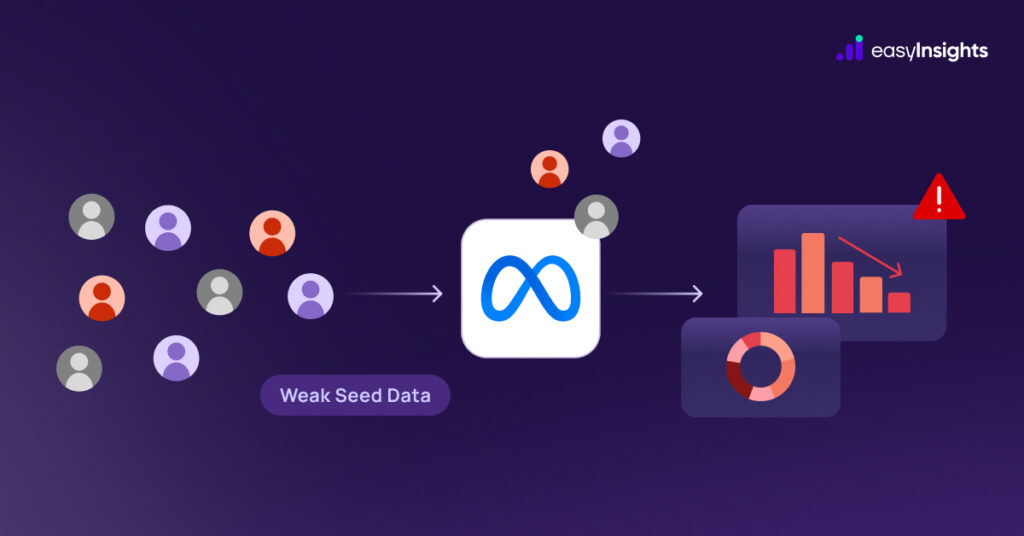
If your Meta Lookalike Audiences aren’t converting like before, you’re not alone. Signal loss, privacy changes, and poor event quality have weakened how Meta identifies high-value users. The core issue is simple: Lookalikes are only as strong as the seed audience behind them.
When seed data is noisy, low-intent, or outdated, performance drops and costs rise. This blog breaks down why this happens and how to rebuild cleaner, conversion-ready seed audiences that actually work. Let’s get started!
Jump ahead to:
What lookalike audiences are
Lookalike audiences help you reach new people who behave like your existing customers. Meta builds them using customer lists or pixel/CAPI data to find users with similar traits and intent, making them one of the most effective ways to scale campaigns with better conversion rates and lower costs.
Why They Used to Be a Top-Performing Meta Targeting Method
Before Apple’s iOS 14.5 update (and other global privacy shifts), Meta had an extremely powerful data-gathering tool: the Meta Pixel.
1. Highly accurate retargeting
Meta Pixel could track almost every user action on a website.
2. Stronger Lookalike Audiences
Meta could analyze rich signals from your best customers or high-intent visitors and find new users who closely match their behavior.
3. Better optimization and learning
With full conversion data and a longer 28-day attribution window, Meta’s algorithm could quickly learn who was most likely to convert and focus ad delivery on those users.
Why They’re Declining in Performance Post-iOS 14 & Privacy Updates
The decline is primarily due to Apple’s App Tracking Transparency (ATT) framework in iOS 14.5, which disrupted Meta’s ability to collect and use user data across apps and websites.
1. Loss of the Identifier for Advertisers (IDFA)
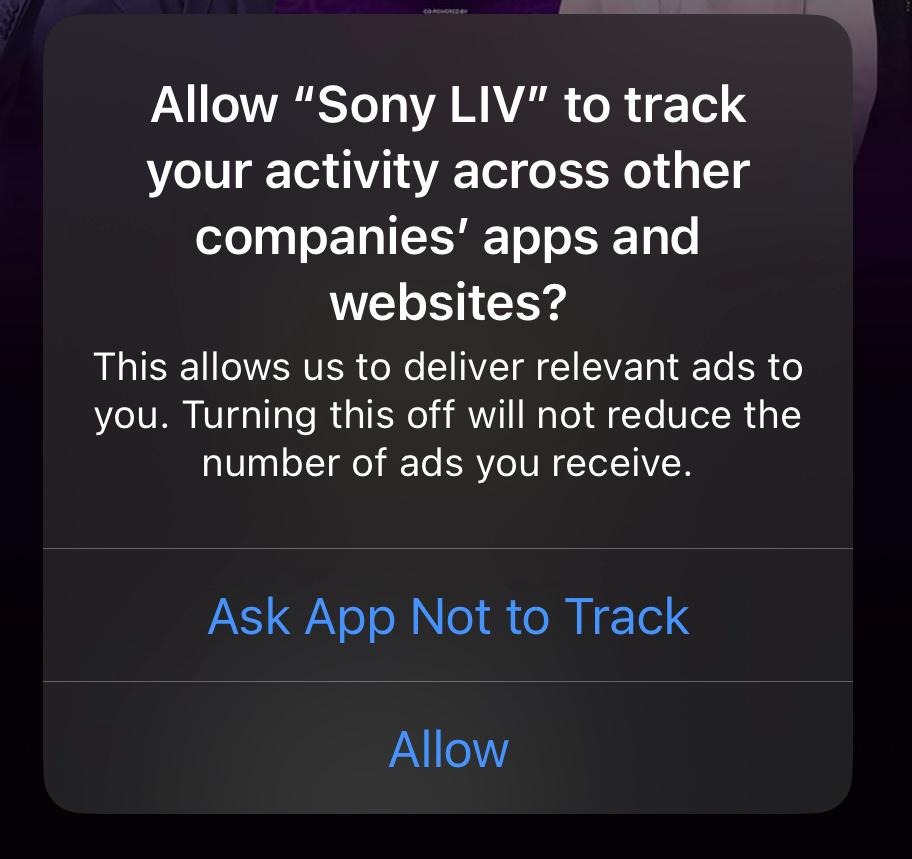
- The Core Change: The ATT framework requires apps (like Facebook and Instagram) to explicitly ask iOS users for permission to track their activity across other apps and websites.
- The Impact: Most users choose to “Ask App Not To Track.” When a user opts out, Meta loses access to the IDFA, the key identifier that links a user’s activity on the Meta app to their activity on external websites.
2. Inaccurate Custom and Lookalike Audiences
- Retargeting
- Lookalikes
3. Limited and Delayed Conversion Data
- Limited events tracked
Meta now tracks only up to 8 prioritized conversion events per domain for opted-out users, reducing learning signals. - Shorter attribution window
The shift from 28-day click to shorter windows (like 7-day click) causes late conversions to go unreported. - Delayed reporting
Conversion data can be delayed by up to 72 hours, limiting real-time optimization. - Weaker optimization signals
Fewer, delayed signals make it harder for Meta’s algorithm to learn and optimize effectively.
Also Read: How ATT, the loss of IDFA, and SKAdNetwork reshaped digital marketing forever
Why Lookalikes Aren’t Working Anymore
Lookalike Audiences were once one of Meta’s strongest prospecting tools, but their performance has declined after major privacy changes, reduced signal visibility, and weaker data quality. Here’s a detailed breakdown of what’s hurting them today.
Shrinking Data Visibility (iOS14 & Privacy Changes)
After iOS 14 and App Tracking Transparency (ATT), Meta lost access to a massive amount of device-level behavior. This means Meta can no longer see what many users are clicking, viewing, or purchasing across apps and websites. With fewer signals coming in:
- Lost device-level signals mean Meta has less understanding of how your customers behave outside the Meta apps.
- Reduced event tracking leads to incomplete conversion data – fewer leads, add-to-carts, and leads are captured.
- Weaker audience creation happens because Meta can’t clearly identify the patterns that used to make Lookalikes so powerful.
Poor Source/Seed Quality
Your Lookalike is only as good as your seed audience. The decline in Lookalake performance often starts with poor-quality seeds:
- Wrong seed selection happens when advertisers use broad or low-intent lists (e.g., all website visitors instead of high-value buyers).
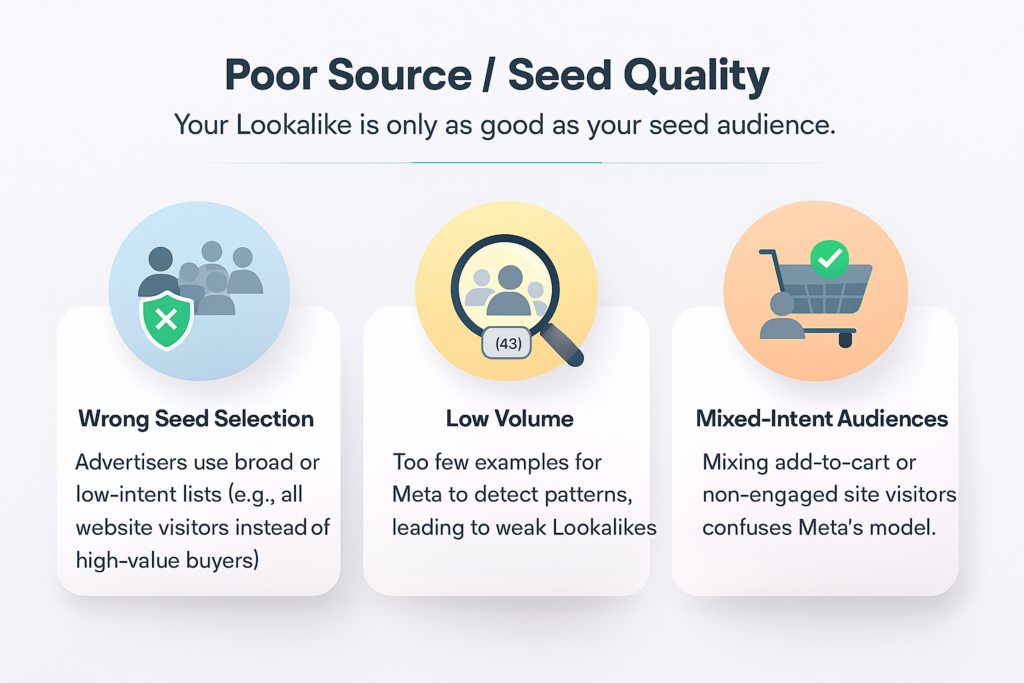
- Low-volume seeds don’t give Meta enough examples to detect patterns, leading to weak Lookalikes.
- Mixed-intent audiences – like combining add-to-cart or non-engaged site visitors – confuse Meta’s model.
Low Match Rates
Match rates are how well Meta can match your uploaded or tracked customer data (emails, phone numbers, lead submit) to real Meta users.
Poor EMQ automatically weakens the entire Lookalike generation process.
Broken Pixel/CAPI Setup
A faulty tracking setup directly affects Lookalikes – because they rely on conversion signals to build seed pools. Common problems include:
- Duplicate or missing events, where Meta either receives the same lead twice or doesn’t receive it at all.
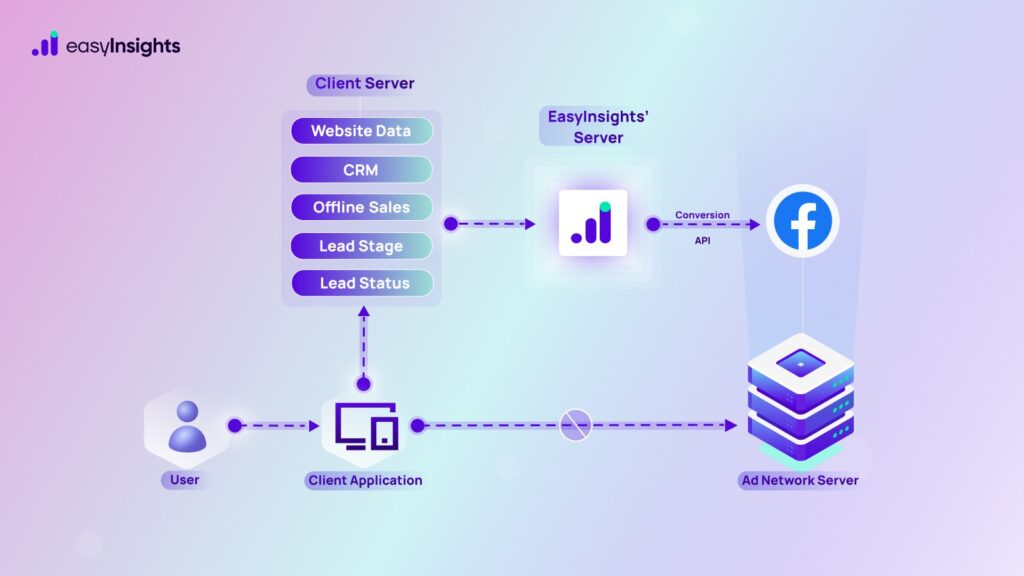
- Wrong optimization actions, where campaigns optimize for the wrong.
- Conversion drop-offs, where CAPI fails to deliver the event with correct identifiers, hurt match rates.
What a High-Quality Seed Audience Actually Looks Like
1. High-Fidelity Identifiers
- Uses clean first-party data (CRM, backend systems)
- Includes real emails, phone numbers, and device IDs
- More identifiers per user = higher match rates and better Lookalikes
2. Clear Intent
- Built from buyers, not casual visitors
- Focuses on high-value actions (purchases, repeat buyers, high LTV users)
- Avoids mixing low-intent and high-intent users
3. Sufficient Volume
- Ideal seed size: 1,000–10,000 users
- Very small lists don’t give Meta enough data to learn patterns
- Larger, quality lists improve consistency and scale
Why This Drives Conversions
- Cleaner signals help Meta build more precise Lookalikes
- Optimization shifts from clicks to real business outcomes
- Results in lower CPA and more scalable growth
Types of Seed Audiences That Convert Best
Meta Lookalikes perform best when the seed audience includes high-intent, high-value users. Feeding the algorithm your strongest customers helps it find more people who are likely to convert and spend more.
High-Value Buyers & Highest LTV Users (Best Performing Seeds)
- Highest LTV Users
Customers with the highest lifetime spend. Ideal for value-based Lookalikes. - High-Value Buyers
Customers with above-average order values. These users signal strong purchase intent and willingness to spend more per transaction.
Why this works
- Optimizes for revenue, not just conversions
- Improves Lookalike quality and scalability
- Drives higher conversion value
When to Stop Using Lookalikes
Lookalikes work only when your seed data is clean, strong, and large enough. When data quality drops, volumes shrink, or audiences become too narrow, performance declines, and Meta’s AI often does better without them. Here’s what to switch to:
1. Broad Targeting
- Works best when Pixel/CAPI signals are clean
- Meta optimizes using real-time in-ad behavior
- Ideal for accounts with strong creative variety
- Often delivers lower costs than fatigued 1% LALs
2. Advantage+ Shopping Campaigns (ASC)
- Best for accounts with consistent conversion history
- Blends broad, retargeting, and interest signals automatically
- Frequently outperforms LAL-based campaigns
3. Interest Clustering
- A middle ground for niche or early-stage brands
- Combine 5–15 related interests instead of narrow targeting
- Keeps reaching broad while staying contextually relevant
How EasyInsights Helps You
Clean seed data at the source
EasyInsights automatically removes duplicates, fixes formatting issues, and standardizes identifiers to improve data accuracy and match rates.
Unified customer identities
Multiple identifiers (email, phone, device IDs, CRM data) are stitched into a single user profile for clearer audience modeling.
Higher match rates on Meta
Enriched first-party data improves Meta match rates and Event Match Quality (EMQ), making Lookalikes more precise.
Stronger CAPI event quality
Enriched CAPI events with additional attributes improve attribution and Lookalike learning.
Better Lookalike performance
Cleaner, richer signals lead to lower CPA, stronger conversions, and more scalable campaigns.
Conclusion
Lookalike Audiences haven’t stopped working; the data behind them has changed. As privacy shifts reduce signal quality, success now depends on cleaner seed audiences, stronger first-party data, and smarter optimization strategies.