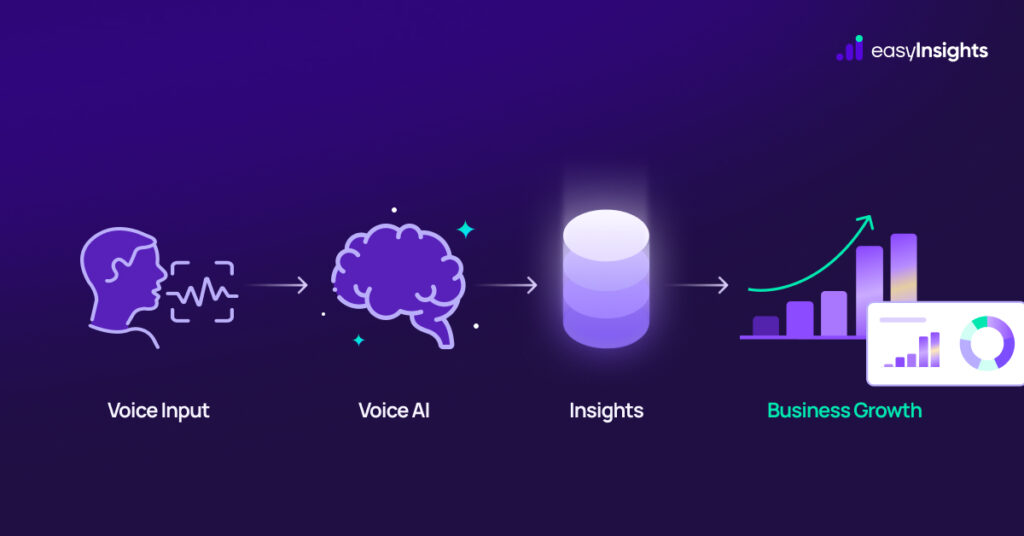
Customers today prefer speaking over typing, expecting fast and natural responses. This shift has made Voice AI a powerful tool for businesses to engage, support, and convert users through real-time conversations.
However, simply using Voice AI isn’t enough, its real value comes from how well you use the data it generates.
In this blog, we will walk you through how Voice AI drives business growth, its key use cases, challenges, and how EasyInsights helps turn conversations into conversions.
Jump ahead to:
What Is Voice AI
Voice AI refers to artificial intelligence systems that enable machines to understand, process, and respond to human speech in real time.
It combines multiple advanced technologies such as:
- Automatic Speech Recognition (ASR) to convert spoken language into text
- Natural Language Processing (NLP) to understand user intent and context
- Text-to-Speech (TTS) to generate human-like voice responses
In simple terms, Voice AI allows users to interact with technology through natural, conversational speech instead of typing or clicking.
How Voice AI Works
The Voice AI process typically follows a three-step pipeline:
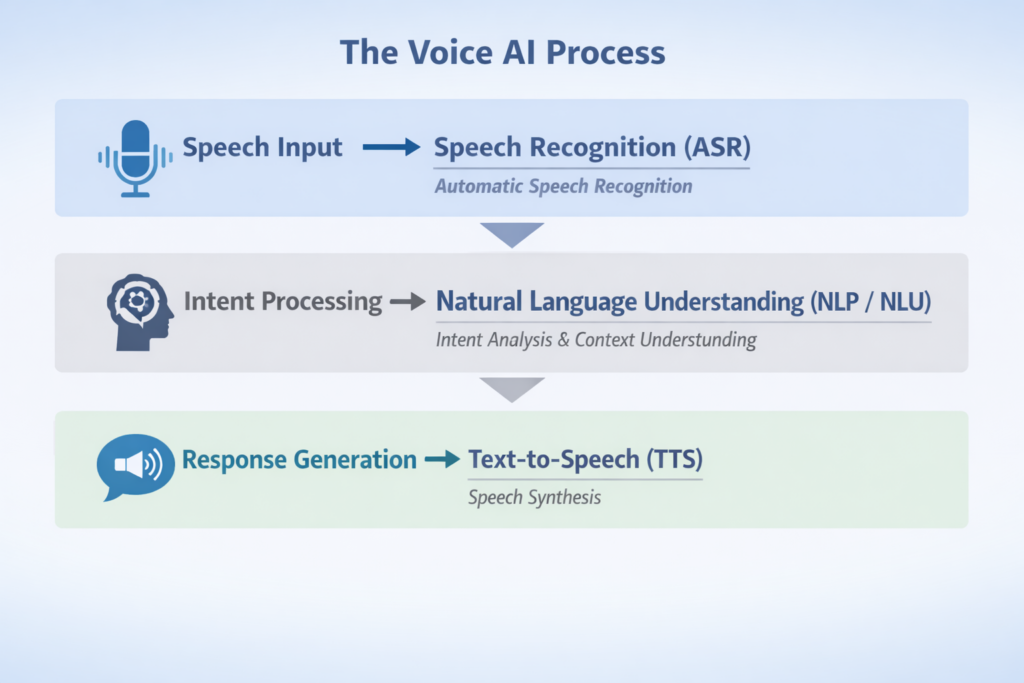
- Speech Input → Speech Recognition (ASR)
The user speaks, and the system converts voice into text in real time - Intent Processing → Natural Language Understanding (NLP/NLU)
The AI analyzes the text to identify:
- User intent
- Context
- Entities (e.g., product, location, request type)
- Response Generation → Text-to-Speech (TTS)
The system generates a response and converts it back into natural-sounding speech
The result is a seamless, human-like conversation between the user and the system.
Why Voice AI Is a Game-Changer for Brands
Faster Customer Interactions
Voice AI removes friction from user interactions by eliminating the need for typing, form-filling, or navigation. Customers can simply speak their query and receive instant, real-time responses.
This speed is critical in today’s attention economy, where delays often lead to drop-offs. Faster interactions mean:
- Quicker query resolution
- Reduced wait times
- Improved customer satisfaction
24/7 Availability at Scale
Unlike human agents, Voice AI systems operate continuously without downtime. Businesses can handle thousands of simultaneous conversations across time zones without increasing operational complexity.
This ensures:
- Always-on customer support
- No missed leads or opportunities
- Consistent user experience, regardless of volume
Higher Engagement and Conversion Rates
Voice interactions feel more natural and human compared to traditional interfaces. By enabling conversational, real-time engagement, Voice AI builds trust and keeps users more engaged.
This leads to:
- Higher intent capture
- Better lead qualification
- Improved conversion rates
Users are more likely to convert when they can talk rather than type.
Reduced Operational Costs
Voice AI significantly reduces the need for large customer support and sales teams by automating repetitive interactions.
Brands can:
- Handle high volumes without scaling headcount
- Lower customer acquisition and servicing costs
- Allocate human resources to high-value tasks
Key Use Cases of Voice AI in Business
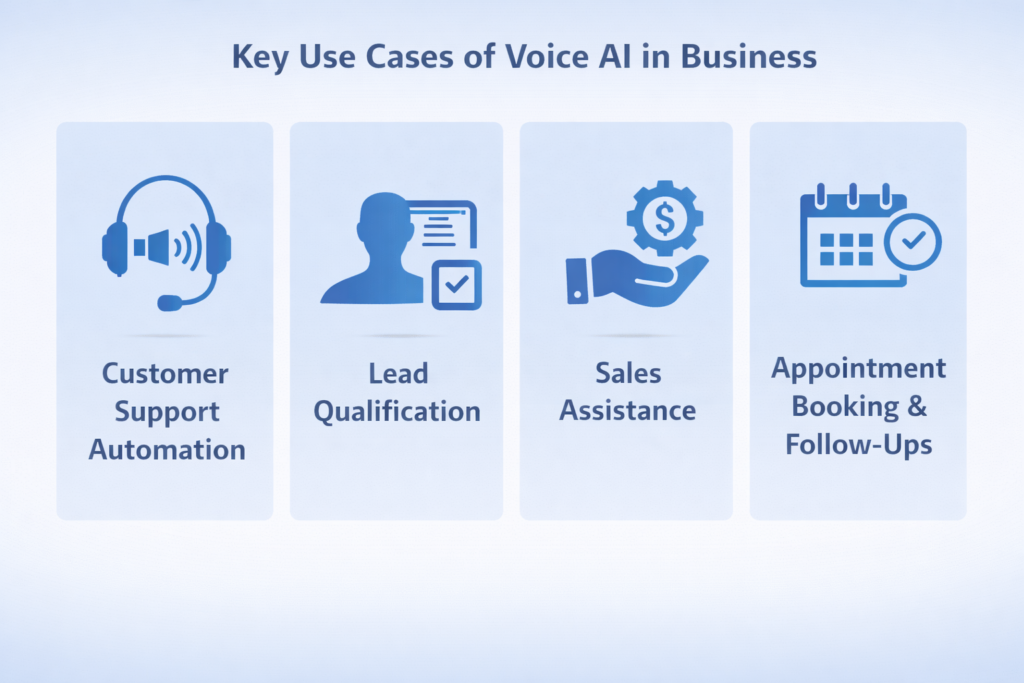
1. Customer Support Automation – Voice AI enables businesses to automate high-volume customer interactions by instantly resolving common queries and intelligently routing complex issues to human agents.
2. Lead Qualification – Voice AI systems can engage prospects in real-time conversations, ask relevant questions, and identify high-intent leads based on responses and behavior signals.
3. Sales Assistance – By delivering personalized product recommendations and guided conversations, Voice AI helps businesses drive conversions and increase upsell and cross-sell opportunities.
4. Appointment Booking & Follow-Ups – Voice AI simplifies scheduling by automating appointment bookings, confirmations, and reminders, reducing manual effort and minimizing no-shows.
The Hidden Challenge: Voice Data Without Intelligence
Voice AI adoption is growing fast, but many brands overlook a key gap – conversations alone don’t drive growth, insights do.
Without the ability to structure and activate data, Voice AI remains just an interaction layer rather than a true performance driver.
1. Conversations ≠ Insights
Brands today collect large volumes of voice data – calls, transcripts, and interaction logs.
However, most of it remains unstructured and underutilized.
As a result, businesses lack clarity on:
- Which conversations signal high purchase intent
- Which leads are actually qualified
- What drives real conversions
2. Missing Feedback Loop to Marketing Platforms
Voice interactions often remain disconnected from the broader marketing ecosystem.
This means critical data is not fed back into:
- Ad platforms (e.g., Google Ads, Meta Ads)
- CRM systems
- Analytics tools
Without these signals, platforms continue optimizing on incomplete data, impacting targeting, bidding, and overall performance.
Benefits of Combining Voice AI + EasyInsights
When the right data infrastructure powers Voice AI, it moves beyond automation and becomes a true growth driver.
- Higher Lead Quality
Identify and prioritize high-intent conversations instead of all interactions - Better Campaign Optimization
Feed enriched signals back to ad platforms for smarter targeting and bidding - Improved ROI
Optimize campaigns based on revenue-driven outcomes, not just surface-level metrics - Reduced Wasted Ad Spend
Eliminate low-quality leads and focus the budget on what actually converts
Additional read: How Sending Qualified Lead Signals Back to Ad Platforms Improves Performance
Conclusion
Voice AI is no longer just a customer support tool; it’s rapidly becoming a high-impact growth channel.
However, without proper data capture, enrichment, and feedback loops, its true potential remains untapped. Conversations alone don’t drive results; actionable insights do.
Turning conversations into conversions, and conversions into revenue. Book a Demo with EasyInsights!