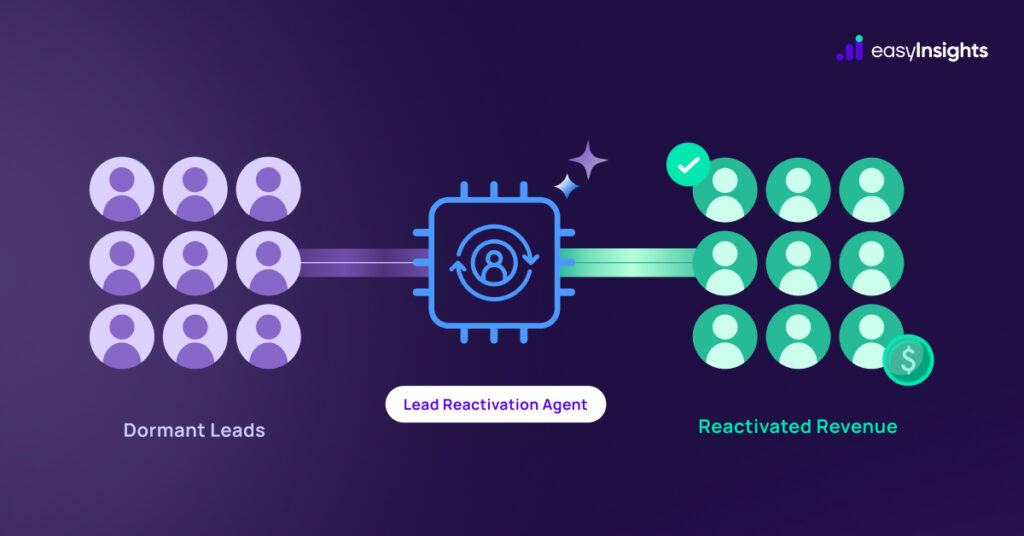
Most brands pour money into lead generation, but 60–80% of leads go dormant, leaving revenue on the table. These leads aren’t lost; they’re just untimed. Instead of overspending on new acquisitions, smart marketers use AI-driven lead reactivation to unlock hidden value in their CRM.
In this blog, we’ll explore why leads go dormant, why traditional retargeting fails, and how EasyInsights identifies buying intent to reactivate dormant revenue.
Jump ahead to:
What Are Dormant Leads?
Dormant leads are prospects who once showed interest but then stopped engaging or converting. These can include people like:
– Someone who filled out a form but never bought anything
– A demo request that didn’t turn into a sale
– Trial users who didn’t upgrade to a paid plan
– Past customers who haven’t bought again
In other words, they’re not “dead” – just inactive and unresponsive for a significant period.
Why Do Leads Go Cold?
Leads usually go inactive for a mix of external reasons and internal process gaps. Common causes include:
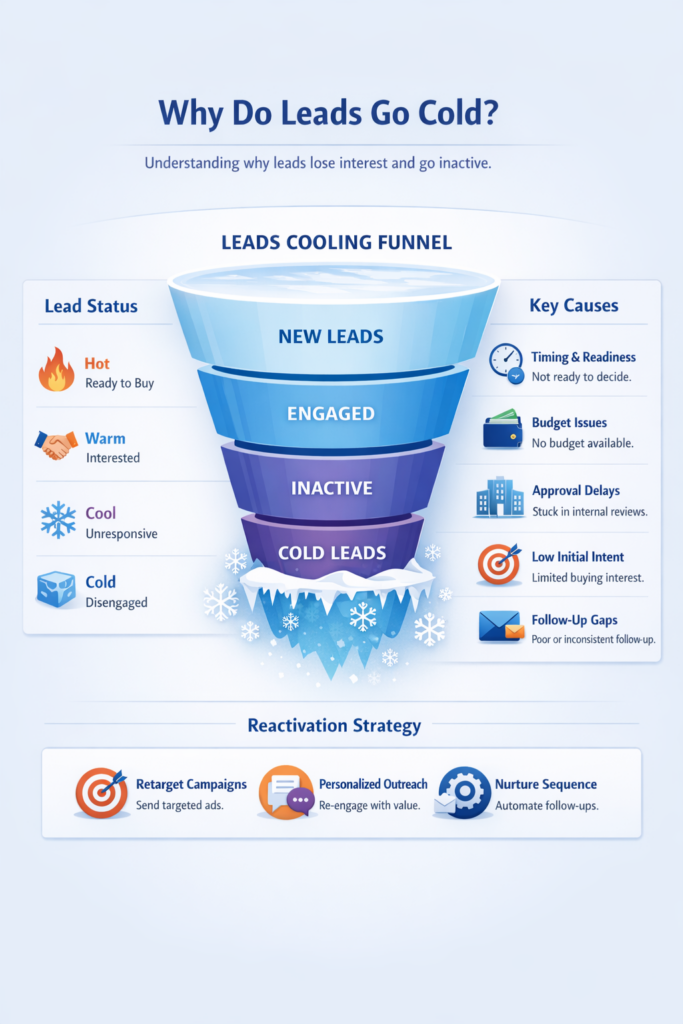
Timing & Readiness
- The prospect wasn’t ready to buy when they first showed interest
- Their own budget cycle or buying timeline didn’t match yours
Many leads get cold simply because the initial timing wasn’t right.
Budget Issues
- They liked the idea, but didn’t have the budget at that moment
- Funding was delayed or frozen in their organization
This is one of the top real-world reasons for dormant leads.
Internal Approval Delays
- Leads needed approvals from their team or higher management
- Decision-making processes took longer than expected
These internal delays often push decisions way down the timeline.
Low Initial Intent
- Some leads were curious but not ready to commit
- They engaged in a minor way (like a form fill) without serious intent
This makes them easy to lose if there isn’t enough motivation to buy soon.
Follow-Up Gaps
- Sales or marketing didn’t follow up in time
- Communication was too generic or infrequent
Leads often go quiet simply because no one stayed in touch.
The Real Problem: Marketing Focuses on CPL, Not Revenue
Many marketing platforms aim to get the cheapest leads, not the most valuable ones.
- Sales teams often complain that leads are of low quality.
- CRM data rarely feeds back into ad platforms, so campaigns don’t “learn” what truly drives revenue.
- High-intent dormant leads – people who were ready to buy later – get ignored.
You keep spending on new leads while old, high-potential ones go cold and decay.
Why Traditional Retargeting Doesn’t Work
1. Blanket Email Blasts
Traditional mass emails don’t respond to what the user actually did. They treat everyone the same – whether they showed high interest or just visited once – leading to lower engagement. This lack of behavior‑based personalization harms performance compared with segmented messaging.
2. Generic Remarketing Ads
Showing the exact same ad to everyone – whether they briefly visited or almost converted – wastes impressions and weakens impact. Many users feel “advert fatigue” from repetitive static ads.
3. No Segmentation by Lead Quality
Traditional retargeting treats all past visitors as equals instead of ranking them by intent (e.g., cart abandoners vs casual visitors). This leads to wasted spend on low‑intent audiences.
When brands use smarter segmentation, conversion rates can increase by up to ~147% compared with generic retargeting.
4. No Revenue‑Weighted Prioritization
Many campaigns are optimized for metrics like clicks or impressions, not actual revenue outcomes – so they fail to focus on the leads that matter most.
5. No Timing Intelligence
Traditional retargeting windows (e.g., just showing the same ad for 30 days) don’t adjust messaging based on when users visited or how their intent changed over time. That means the same message might be shown to a lead long after their interest faded.
How AI Changes Dormant Lead Reactivation
Instead of treating all dormant leads the same, AI analyzes CRM data and past sales outcomes to find patterns.
AI can:
– Identify leads who usually convert after delays
– Detect high-probability dormant segments
– Predict who is most likely to reactivate
– Trigger personalized, well-timed engagement
So instead of “spray and pray” retargeting, AI creates smart reactivation loops that focus on revenue – not just activity.
How EasyInsights Helps
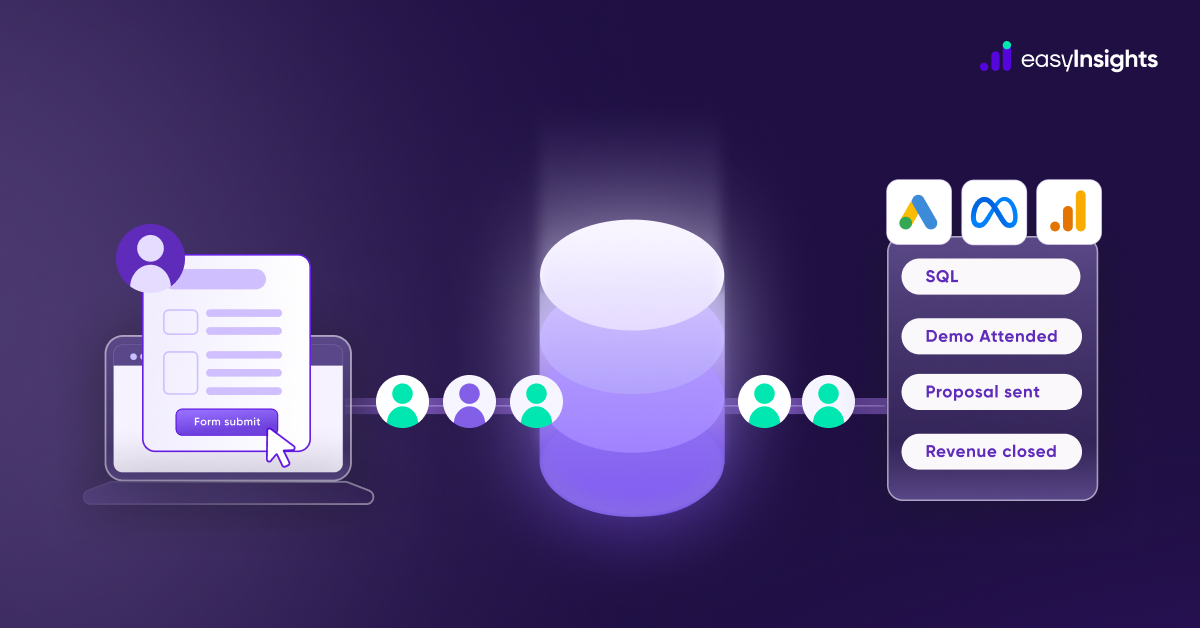
Connects marketing data with CRM and sales outcomes
It bridges the gap between ad platforms and real revenue data, so decisions aren’t based only on CPL.
Scores leads based on revenue probability
Leads are prioritized by their likelihood to convert – not just by engagement metrics.
Feeds revenue-weighted signals back into ad platforms
Platforms optimize around actual business outcomes, not just cheap conversions.
Enables smarter re-engagement campaigns
Campaigns target the right dormant segments with better timing and personalization.
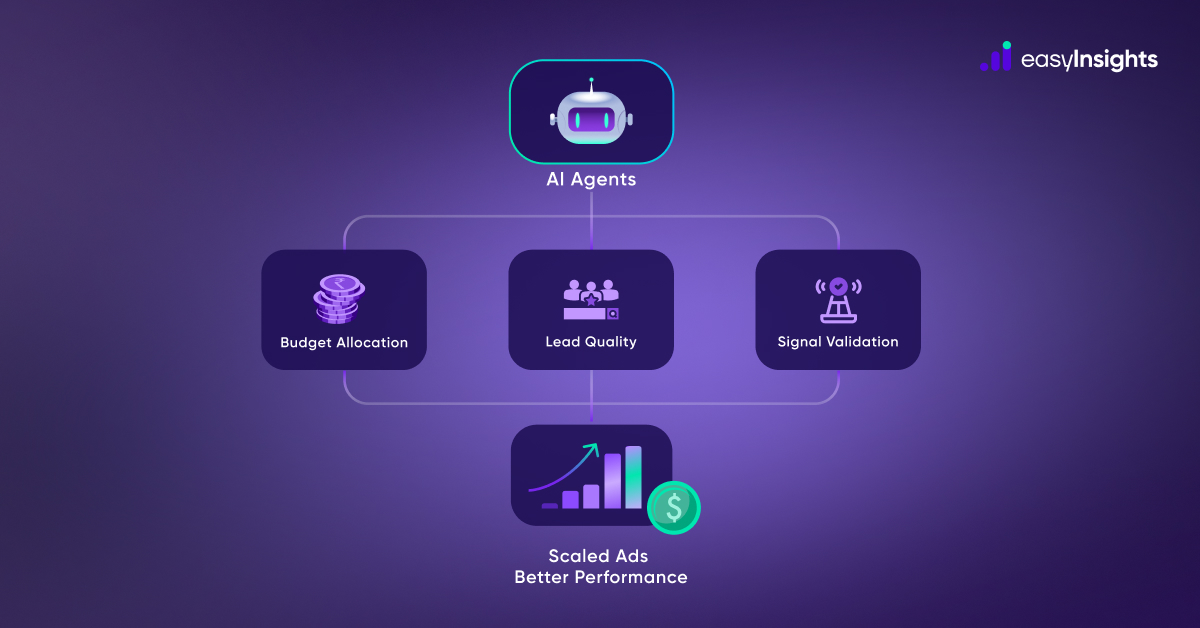
Task-oriented agentic orchestration & ad scaling
AI agents continuously analyze performance, trigger actions, adjust budgets, and scale campaigns based on revenue signals – creating a closed feedback loop.
Conclusion
Dormant leads are not lost revenue – they’re missed timing.
Most brands keep chasing new leads while high-potential prospects sit inactive inside their CRM. The real issue isn’t lead volume – it’s lack of revenue-focused optimization and intelligent follow-up.
Traditional retargeting treats everyone the same. AI changes that by identifying who is most likely to convert, when to engage them, and how to prioritize them based on revenue impact.
With EasyInsights, marketing and sales data work together. Campaigns optimize for actual business outcomes, not just cheap CPL – turning dormant leads into predictable, scalable revenue.