Signals aren’t disappearing overnight-they’re eroding quietly, day by day. At first, campaigns seem fine, but optimization slows, scaling stalls, and performance becomes unpredictable.
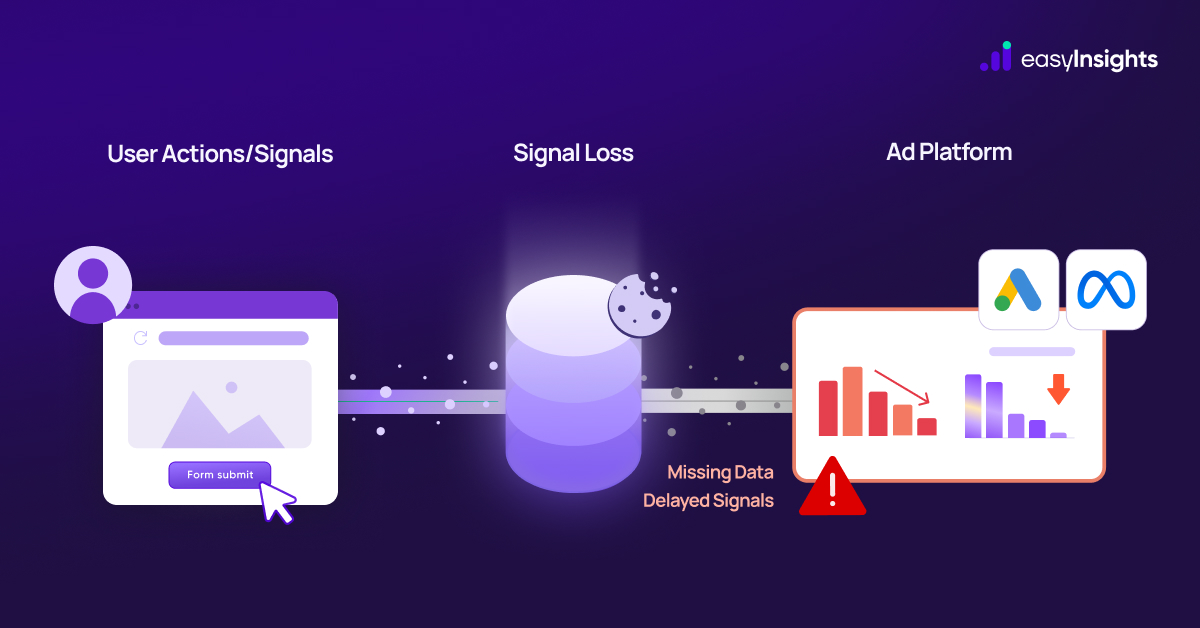
This isn’t a media problem. It’s a measurement problem. Browsers block scripts, cookies expire, and consent signals arrive late. Conversions happen, but platforms don’t see them, weakening learning, distorting attribution, and eroding trust in reports.
With stricter privacy rules, browser restrictions, and opaque platform models, the gap between actual business outcomes and reported data keeps growing.
In this blog, we will discuss why signals are being lost, why the problem is accelerating, and how first-party data is the only sustainable, privacy-compliant way to recover them- because growth stalls when signals disappear, not when spend increases.
Jump ahead to:
Why Signal Loss Is Accelerating
In marketing, signals are the data points that show how users interact with your ads and website, like conversion events (purchases, sign-ups), identifiers (cookies, click IDs), and behavior trails across devices and pages. These signals help ad platforms learn which audiences and actions matter most.
But today, marketers are losing these signals gradually and silently – and many don’t even notice until performance weakens.
- Browser restrictions & ad blockers
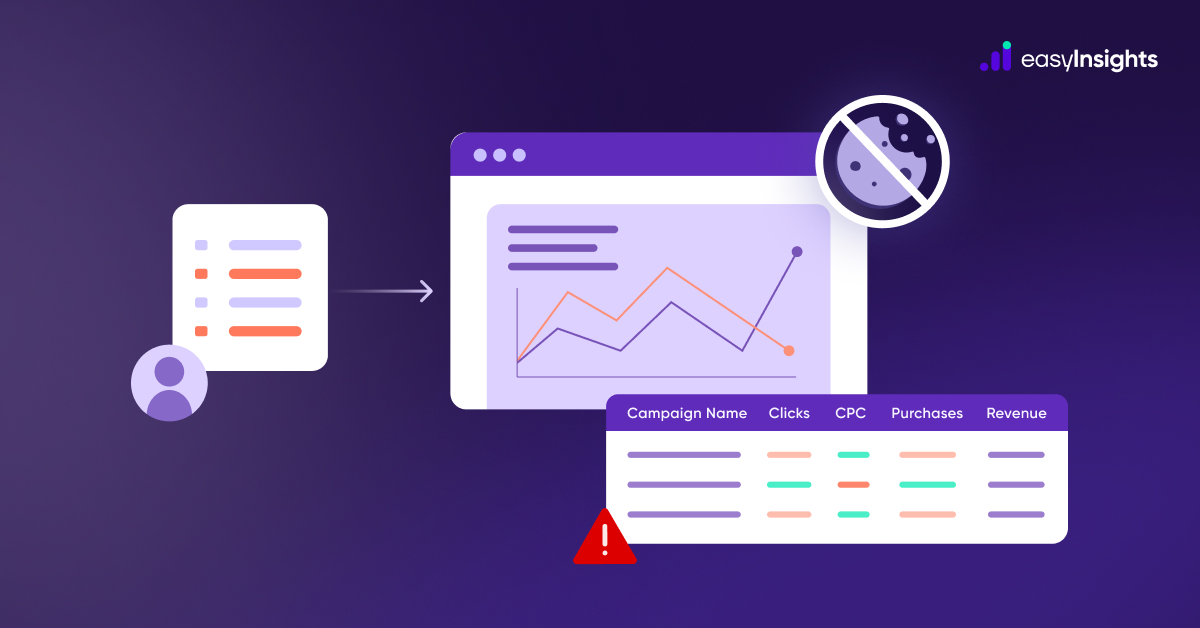
Browsers like Safari and Firefox block third-party cookies and tracking scripts by default. Ad blockers stop pixels from firing altogether, so many user actions never reach analytics or ad platforms. - iOS ATT & IDFA loss
Apple’s App Tracking Transparency requires user permission to track activity across apps. Most users opt out, which removes IDFA access and forces platforms to rely on limited, modeled data instead of real user behavior. - Consent banners & privacy laws
Regulations like GDPR and CCPA require consent before tracking. When users reject or ignore consent banners, cookies and identifiers aren’t set-breaking the link between ads and conversions. - Multi-device, multi-domain journeys
Users move between devices, platforms, and domains before converting. Cookie-based tracking can’t reliably connect these steps, making many real conversions appear “lost.”
Why You’re Losing Signals Every Single Day
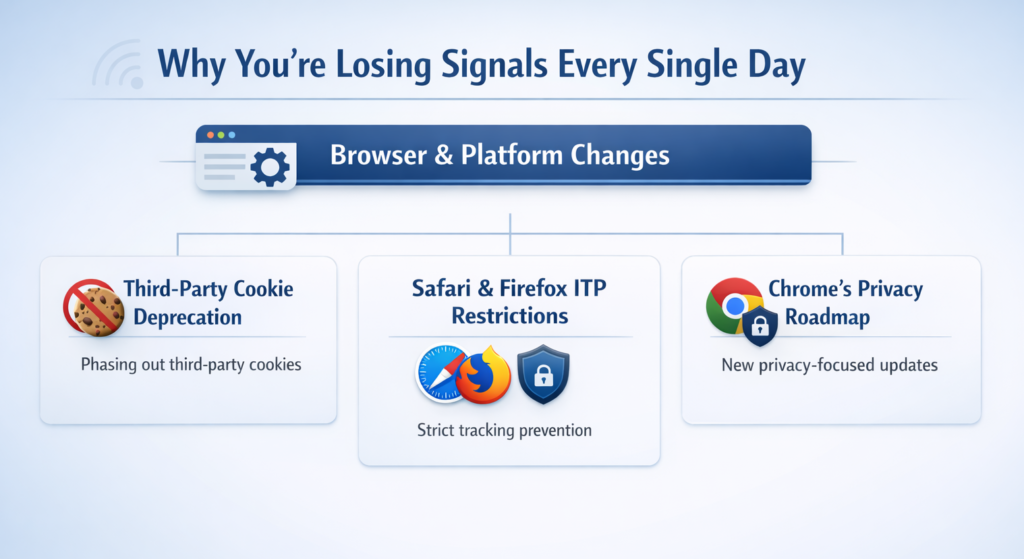
Browser & Platform Changes
- Modern browsers and platforms are tightening privacy controls, which disrupt traditional tracking methods.
Third-party cookie deprecation
- For years, marketers relied on third-party cookies to follow users across websites for attribution and ad targeting. Now, most browsers block or severely limit these cookies, making it harder to connect user journeys.
Safari & Firefox ITP restrictions
- Safari’s Intelligent Tracking Prevention (ITP) and Firefox’s Enhanced Tracking Protection restrict cross-site cookies and shorten how long even first-party cookies last, breaking tracking continuity.
Chrome’s privacy roadmap
- Even though Google has paused forcing third-party cookie removal in Chrome for now, the broader industry trend is toward privacy-first tracking that depreciates legacy identifiers.
Client-Side Tracking Is Breaking
Traditional tracking relies on browser-side code (JavaScript) to send events back to systems.
Ad blockers blocking scripts – Increasing numbers of users install blockers that prevent scripts – including analytics and tracking tags – from loading at all.
Events firing inconsistently – If tracking tags load too slowly or are blocked by privacy settings, key conversion events may never fire.
Page-load dependency – Client-side tracking depends on a user’s browser loading the page fully; any interruption means data loss.
Result
- Conversions happen, but aren’t recorded – Users complete actions that should count as conversions, but platforms don’t see them reliably.
- Platforms learn from partial data – With incomplete signals, optimization engines struggle to identify patterns and improve performance.
Also Read: How to Use Client Side and Server Side Tracking together
Why Third-Party Fixes No Longer Work
Advertisers used to rely heavily on third-party data – cookies and tracking tags from networks they didn’t own – to measure performance and optimize campaigns. Today, many still hope that simple fixes like better attribution models, MMM, or platform AI will solve the problem. But those hopes overlook a deeper reality.
Common Misconceptions About Fixing Signal Loss
| Misconception | Why It Sounds Right | The Reality |
| “Better attribution models will fix it” | Advanced models promise to stitch complex user journeys | Attribution models still rely on underlying data. With third-party identifiers disappearing, models fill gaps with assumptions, not real user actions. |
| “MMM will solve the problem” | MMM works without user-level tracking and shows channel impact | MMM is slow, high-level, and not designed for real-time campaign optimization or platform learning. It can’t replace granular signals. |
| “Platform AI will figure it out” | Platforms market AI as self-optimizing | AI can only learn from the data it receives. Missing or blocked signals lead to modeled guesses, not true optimization. |
Also Read: Marketing Mix Modelling: A Comprehensive Guide
The Reality of Modern Measurement
| Core Truth | What It Means |
| You can’t model what you never captured | Missing events can’t be accurately recreated by attribution, MMM, or AI. |
| Garbage signals = garbage optimization | Incomplete or inferred data leads to unstable ROAS, rising CAC, and poor scaling. |
| The real problem is signal loss, not tooling | Tools still exist, but the third-party identifiers they relied on are gone. |
Where Signal Loss Actually Happens
Most marketers look for signal loss inside ad dashboards.
In reality, the biggest failures happen below the dashboard, inside the tracking stack-where data is collected, passed, and stitched together.
Pixel Issues (Client-Side Tracking Failures)
Pixels are often assumed to be “working” because they’re installed-but many fail silently. Common problems:
- Missing events: Key actions like Add-to-Cart or Purchase don’t fire at all.
- Duplicate events: The same conversion fires twice, inflating numbers.
- Wrong event priority: Low-value events fire instead of high-value ones, confusing algorithms.
Ad platforms optimize based on event signals. When events are missing or incorrect, platforms learn from partial or wrong data-leading to poor targeting and higher CAC.
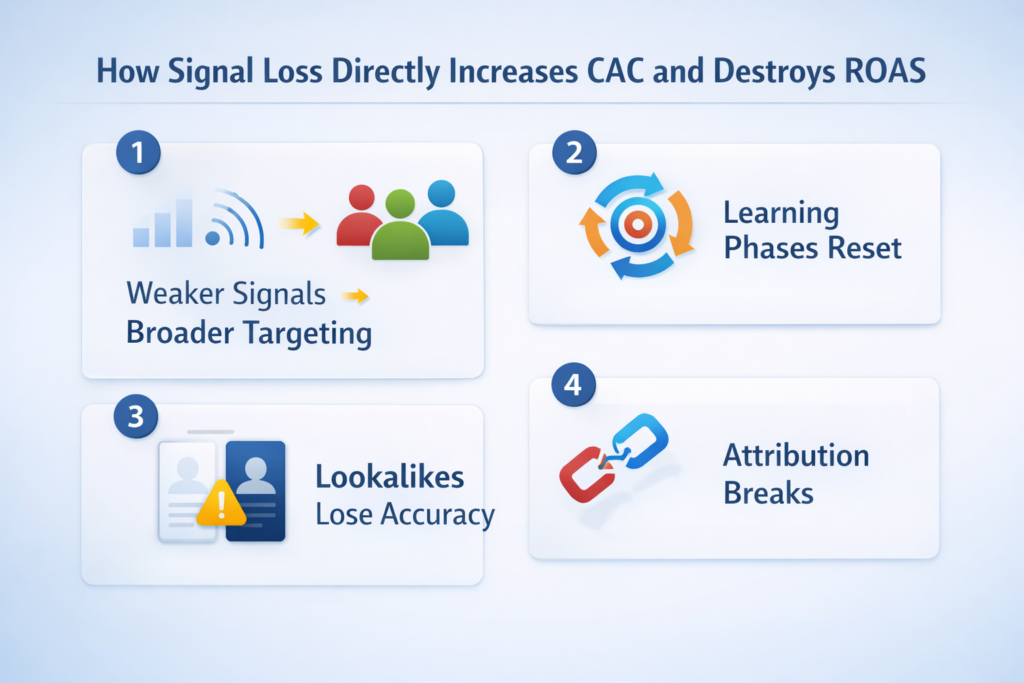
How Signal Loss Directly Increases CAC and Destroys ROAS
Signal loss doesn’t just affect reporting – it breaks how ad platforms learn and optimize. When platforms receive incomplete or delayed signals, performance drops even if spend and creatives stay the same.
1. Weaker Signals → Broader Targeting
With less conversion data, algorithms widen targeting, driving higher CPMs and lower conversion rates.
Result: You pay more to reach less relevant users.
2. Learning Phases Reset
Dropped or delayed events force platforms back into learning mode, causing unstable CPAs and wasted spend.
Result: Scaling stalls despite higher budgets.
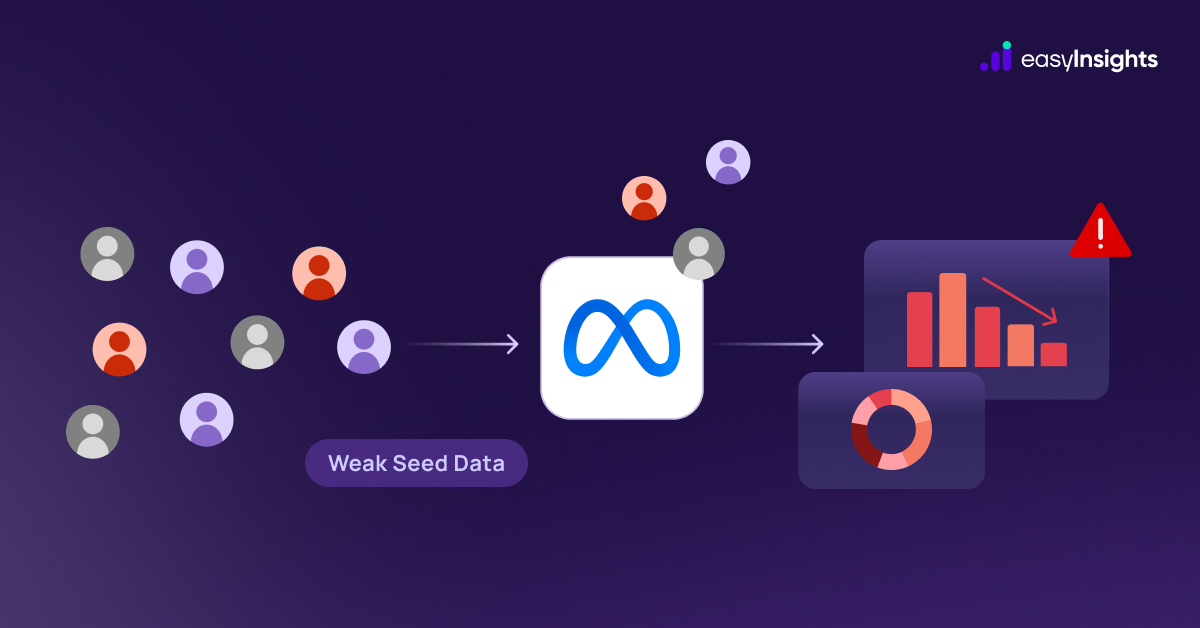
3. Lookalikes Lose Accuracy
Incomplete signals weaken seed audiences, leading to broader, lower-intent lookalikes.
Result: CAC rises as quality declines.
4. Attribution Breaks
Missing signals create mismatches across platforms, making ROAS look worse than reality.
Result: Budget decisions are made on distorted data.
What a Signal-Resilient Measurement Stack Looks Like
Recovering lost signals isn’t about quick fixes – it requires a strong, end-to-end measurement foundation.
1. First-Party, Server-Side Tracking
Capture events directly from your website, app, or CRM and enrich them with first-party identifiers and key parameters. Use server-side tracking to bypass browser restrictions and ad blockers.
2. One Source of Truth
Centralize conversions in a single system, deduplicate browser and server events, and standardize event naming for consistent reporting.
3. Platforms for Optimization, Not Truth
Send clean, unified conversion data to ad platforms for bidding and targeting — but don’t rely on them as your system of record.
4. Continuous Signal Monitoring
Regularly track dropped events, match rates, and cross-domain issues to prevent silent signal loss.
Also read: Server-Side Tracking Explained: GTM vs. True Server-Side Tracking
How EasyInsights Helps Recover Lost Signals
EasyInsights is built specifically for signal recovery in a privacy-first world. It helps by:
- Capturing events server-side
- Enhancing conversions with first-party identifiers
- Deduplicating browser + server events
- Stitching cross-channel journeys
- Sending clean conversions to Meta, Google, and GA4
Conclusion
Signal loss isn’t a sudden failure – it’s a slow leak that quietly weakens performance, inflates CAC, and erodes trust in marketing data. As browser tracking breaks and third-party identifiers disappear, no amount of attribution modeling or platform AI can recover signals that were never captured.
The only sustainable way forward is a first-party, server-side measurement foundation – one that captures real business events, respects user consent, and feeds ad platforms clean, reliable signals they can actually learn from.
Fix the measurement layer, and performance follows.