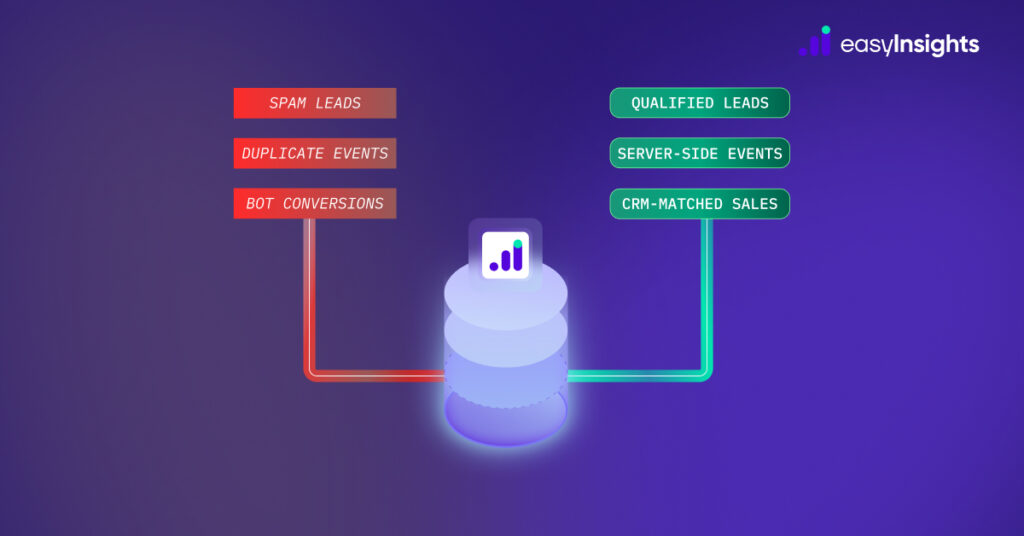
Automation-powered campaign types like Meta Advantage+ and Google Performance Max (PMax) promise big wins: broader reach, creative mix automation, and – most importantly machine learning that optimizes toward conversions and revenue. But there’s a catch: these systems only learn from the signals you feed them. If those signals are incomplete, duplicated, or misattributed, your “smart” campaigns become very good at chasing junk signals – and you pay for the mistakes.
Below I’ll explain why this happens, back it with recent industry findings, and give a practical, technical checklist to fix the problem for good.
Jump ahead to:
The hard fact: marketing data quality is a crisis
A 2025 industry study found that about 45% of the marketing data teams use to make decisions is incomplete, inaccurate, or out of date, and 43% of CMOs say less than half of their marketing data is trustworthy. In short: nearly half your “fuel” is contaminated before it reaches the algorithm. source
When the raw inputs are wrong, the outputs (audience expansion, bid decisions, creative selection) will be wrong too. That’s machine learning 101 – garbage in, garbage out.
What “Junk Data” Means for Ads
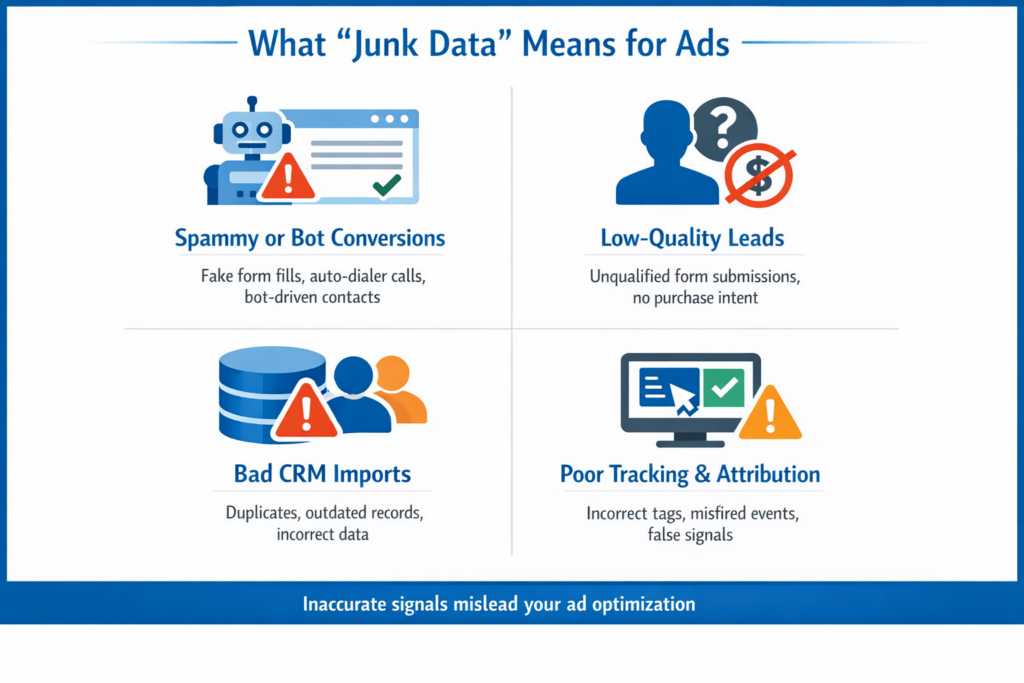
In this context, “junk data” refers to any conversion or signal that is inaccurate, irrelevant, or of very low value. Common examples include:
- Spammy or bot-driven “conversions”: fake form fills, auto-generated contacts, or phone calls from autodialers. These look like conversions in your reports but never lead to real customers.
- Low-quality leads: form submissions or interactions from people with no purchase intent. Tracking a generic “contact us” submission without qualification often mixes real leads with spam and irrelevant inquiries
- Bad CRM imports: duplicate records, outdated contacts, or wrongly tagged data from your CRM can teach the AI the wrong things. For instance, importing every lead record (instead of just won deals) can flood the data set with dead ends.
- Poor attribution or tracking: if your conversion tagging is incorrect or incomplete, the AI sees false signals. For example, if a pixel fires for every button click or page view (counting non-purchase events as conversions), Meta will optimize for those trivial actions
How Algorithm of Meta Advantage+ and PMax work
Advantage+ and PMax are built around data. They require you to set goals (e.g. sales or qualified leads) and provide conversion data, creative assets, and audience signals. Then the platform’s AI decides where to show which ads and how to bid to maximize results.
Google’s help docs emphasize that “Google AI powers Performance Max to maximize your campaign’s results. Google and Meta are aligned on one core message: their algorithms are powerful, but they are only as smart as the data they receive. Performance Max uses Google AI to automate nearly everything – bids, targeting, creatives, and attribution.
Meta’s AI does the same, but stresses that these systems need high-quality, server-side and CRM-backed signals to perform well.
Because these ad platforms now rely more on automation than on manual targeting, the quality of your data signals is critical. A recent analysis notes that modern Meta campaigns rely heavily on a steady stream of high-intent signals” like first-party event data.
Also read: How to Use First-Party Events on Meta
How Advantage+ and PMax “learn” – and why that magnifies bad data
Both platforms are designed to identify patterns in conversion behavior and scale them:
- Meta Advantage+ fuses signals across Facebook and Instagram to automatically choose placements, creatives, and audiences. It relies heavily on conversion events and value signals to find “more like this” users. Facebook
- Google Performance Max aggregates inventory across Search, YouTube, Display, Discover, and Gmail, using automated bidding and creative assembly to hit your goals. It leans on conversion signals, asset performance, and audience signals to steer spend. Google Help
Because both systems optimize based on statistical correlation rather than explicit human rules, any systematic error in your conversion data gets amplified: duplicated purchases look like high-value buyers, inflated leads look like a profitable niche, and misattributed offline sales get credited to the wrong creative or channel.
Why this happens: the tracking & attribution mechanics that break things
- Double-tagging / duplicate events – client + server events without event_id deduplication triple-count conversions. GA4 and tag managers commonly misconfigure triggers, producing duplicates.
- Missing server-side signals – browsers block cookies and pixels; platforms model or estimate missing conversions differently (Google models some conversions when tracking is limited), creating discrepancy with CRM/GA4.
- Different attribution models & windows – Platforms use different default windows and models, so the “same” conversion can be credited to different touchpoints.
- Unreconciled offline/CRM sales – if offline/WhatsApp/phone conversions aren’t stitched back into ad systems, the algorithm never learns from real buyers.
- Low signal quality from forms or poor UTM tagging – leads to missing identifying keys (email/phone/transaction ID) cannot be matched to conversions later.

Feeding Clean Signals: Actionable Strategies
The good news is that you can fix this with disciplined data hygiene. Here are key steps to ensure your AI campaigns learn from valuable signals:
1. Track only real conversions.
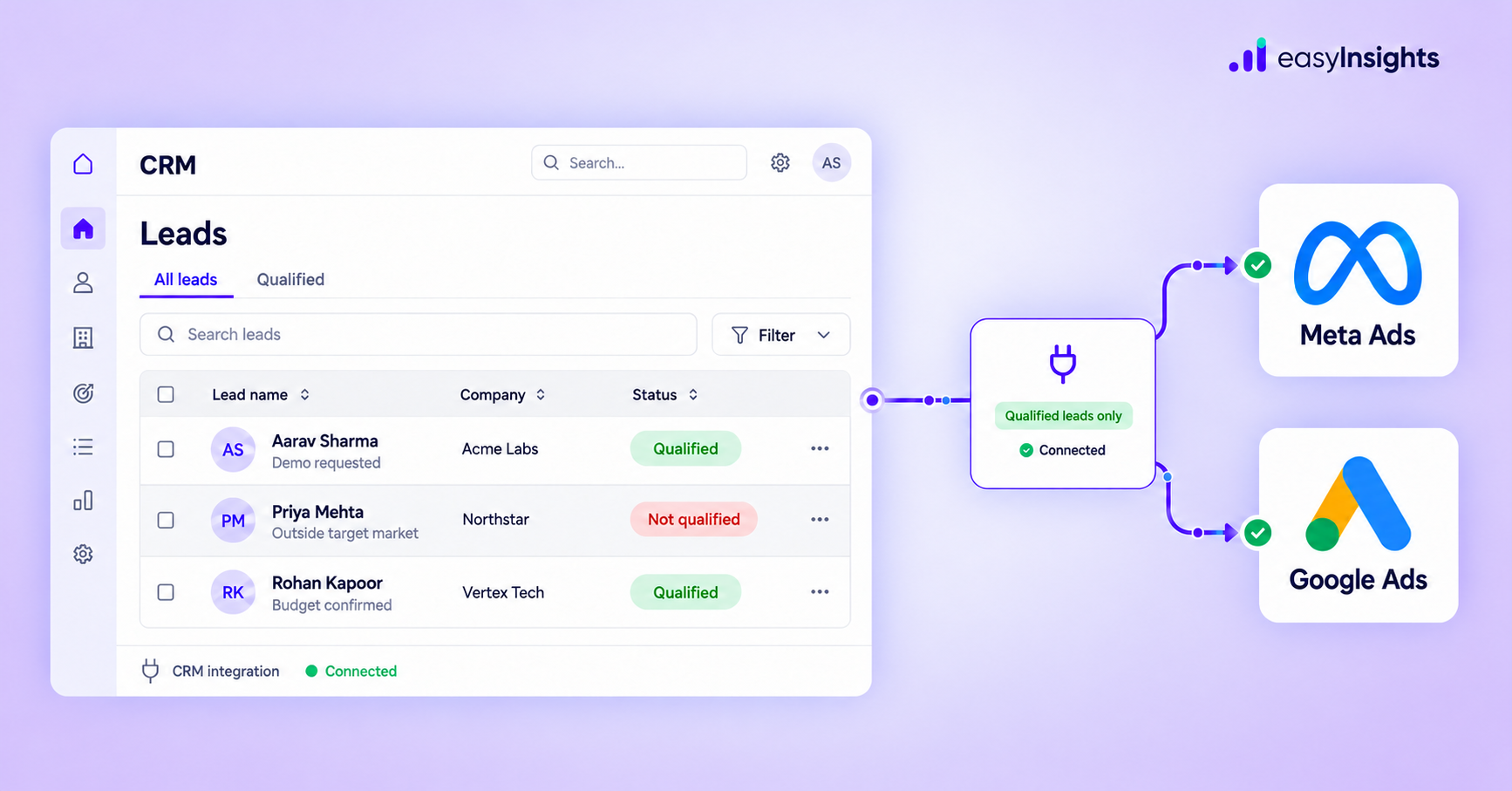
Count events that truly reflect value – qualified leads, real purchases, high-intent actions. Add qualifying questions or flags so only meaningful outcomes get counted.
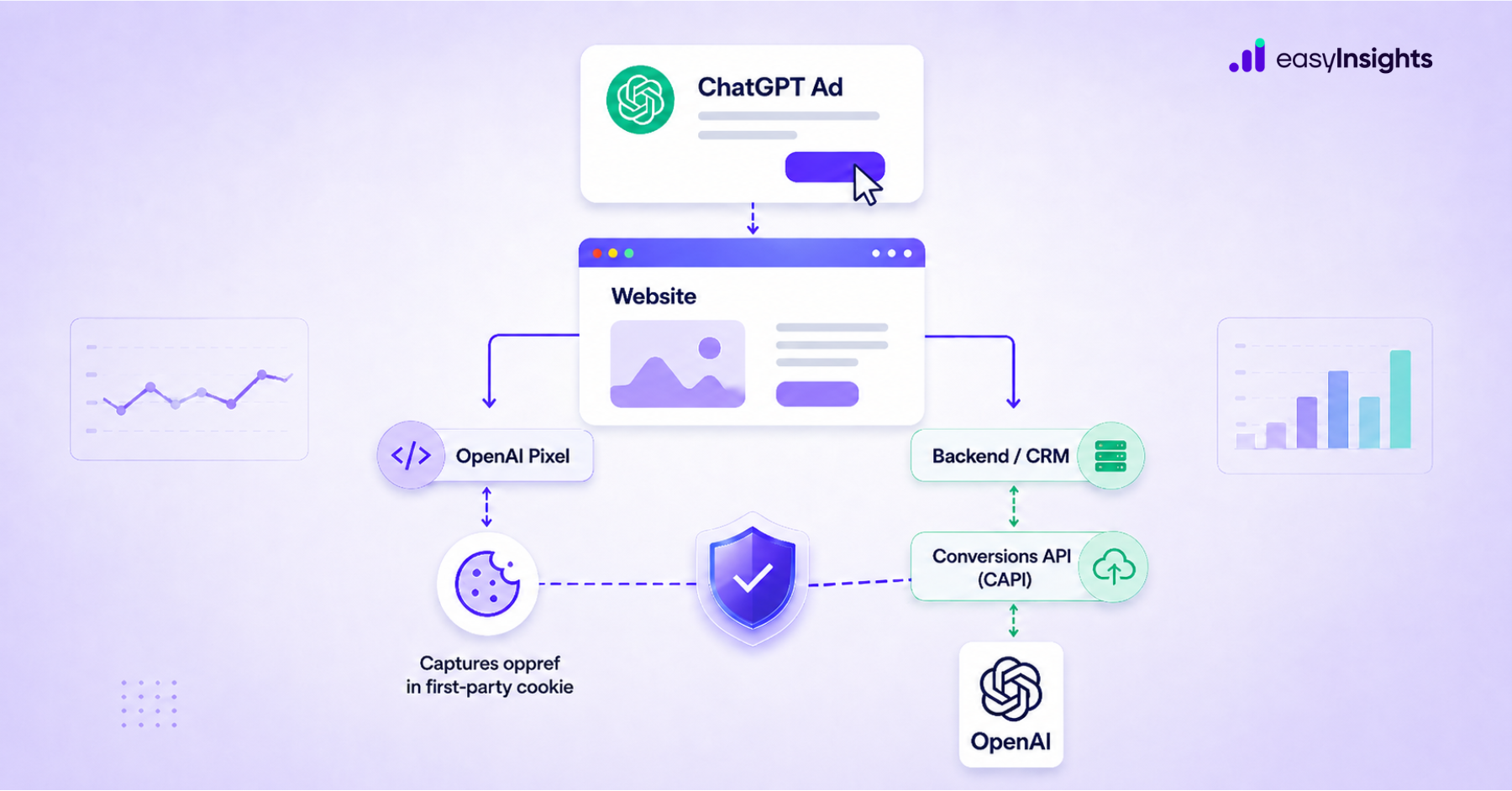
2. Use CAPI + offline uploads.
Send only high-quality conversions back to Meta and Google via Conversions API or CRM-based offline uploads. This ensures the algorithm learns from real outcomes, not noise.
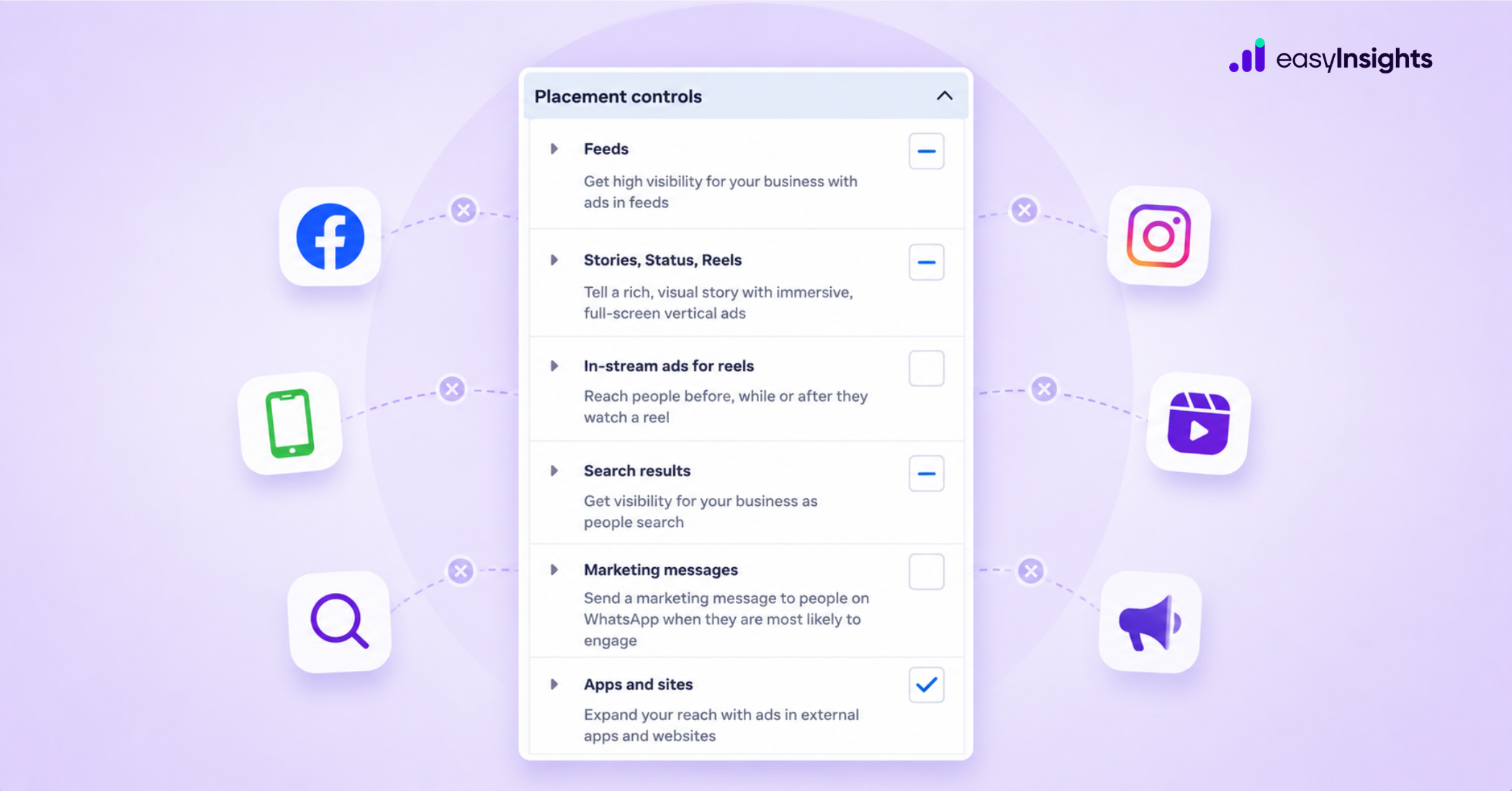
3. Block junk sources.
Cut off placements and audiences that generate useless clicks.
- PMax: use account-level app/site/YouTube exclusions.
- Meta: refine pixel + events and watch for suspicious spikes so you can intervene fast.
4. Provide strong audience signals.
Give PMax and Advantage+ high-value cues like customer lists, website visitors, and intent segments. These guide early learning and prevent AI from drifting toward low-quality traffic.
5. Clean and deduplicate your CRM.
Before syncing data, merge duplicates, remove spam entries, and fix fragmented records. Clean CRM data ensures platforms don’t learn from fake or repeated leads.
Data Platforms & Tools: Unifying Signals
To manage all this data, consider using a marketing intelligence tool. Platforms like EasyInsights are designed to connect and clean multiple data sources for exactly this purpose. For instance, EasyInsights’ first-party data activation tool can gather data from 50+ apps and platforms.
With a simple site pixel and API integrations, EasyInsights tracks events server-side (bypassing ad-blockers) and captures key actions like form fills and purchases and sends this data in real time to platforms like Meta and Google Ads, ensuring your ad platforms always have the freshest, most accurate signals. In other words, it becomes a unified pipeline: your CRM, analytics, and ad accounts all feed into one system that cleans and dedupes the data before passing it to Meta/Google.
Conclusion
Meta Advantage+ and Google PMax are powerful AI engines – but like any engine, they need the right fuel. If you pour in garbage data, expect garbage outputs. Performance marketers must therefore become vigilant data caretakers. That means auditing and cleaning conversion sources, integrating CRMs and call-tracking, using Conversion APIs, and employing tools (EasyInsights) to unify and scrub your data.
By intentionally feeding these systems clean, qualified signals – only genuine purchases or high-quality leads – you let the AI optimize for what actually matters. As experts advise: focus most of your energy on providing high-quality inputs. The result will be campaigns that look good on reports and truly drive your business goals.
Reduce your junk data with EasyInsights – Book a demo