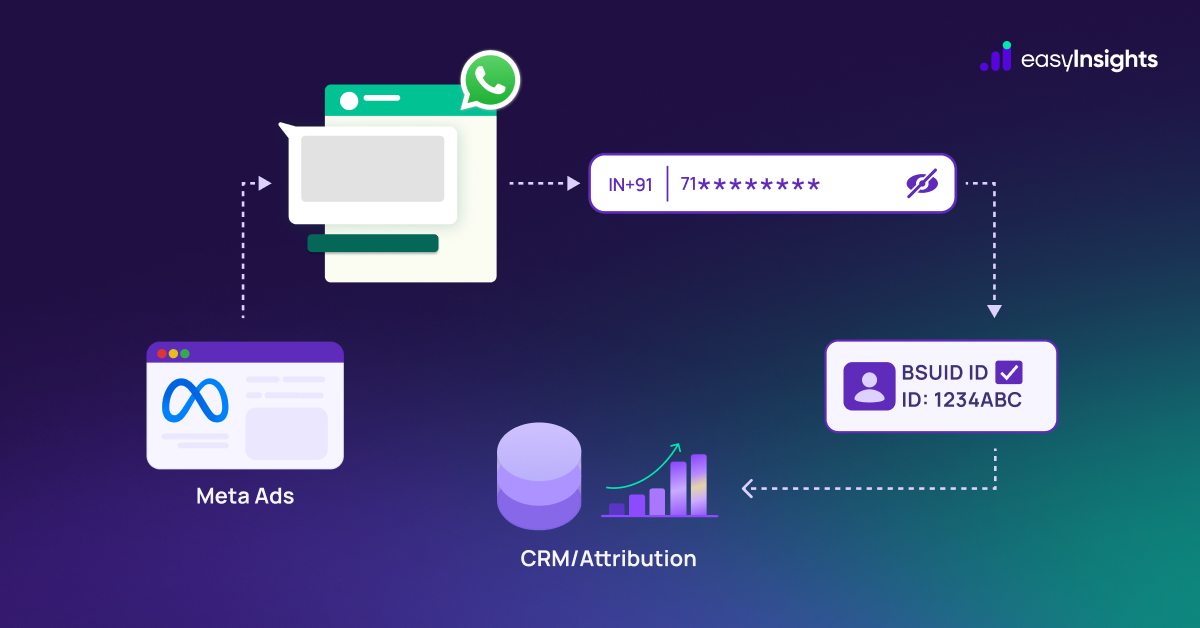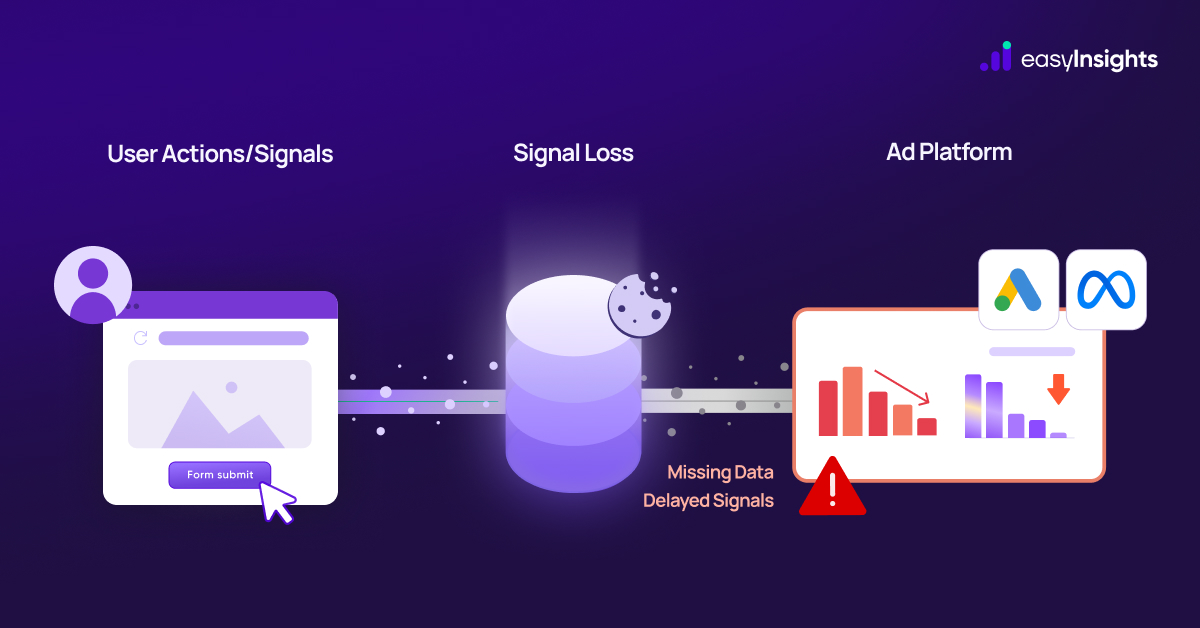
Over the last few years, many marketers started noticing something wasn’t right. Conversion numbers began falling even when campaigns hadn’t changed. Reports from Meta, Google Ads, and GA4 stopped matching. CAC kept rising, but no one could clearly explain why.
At first, these issues looked like optimisation problems. But over time, a deeper pattern emerged: the tracking itself was breaking.
The biggest trigger behind this shift was cookie deprecation, driven by browser privacy updates from Safari (ITP), Firefox (ETP), and Google Chrome’s phase-out of third-party cookies. However, cookies weren’t the only thing failing. The real issue was that traditional, browser-based tracking setups were no longer reliable in a privacy-first internet.
This blog explores why cookie deprecation disrupted tracking and how server-side infrastructure helps regain reliable marketing data.
Jump ahead to:
What Cookie Deprecation Really Means
Third-party cookies were small browser files that allowed advertisers to track users across websites – powering attribution, targeting, and retargeting for years.
Browsers like Safari and Firefox blocked them early, and Google Chrome later announced their phase-out under the Privacy Sandbox initiative, making cookie-based tracking unreliable at scale.
But cookie deprecation isn’t a privacy collapse.
It doesn’t kill marketing – it kills passive tracking.
Marketers now need to rely on first-party data, consent-driven collection, and stronger data infrastructure instead of automatic browser-based tracking.
Also Read: First Party Data: The Answer to Third Party Cookie Loss
How Cookie Deprecation Broke Traditional Tracking Setups
When third-party cookies started disappearing, most tracking setups didn’t fail all at once. Instead, they slowly became unreliable, creating confusion rather than clear errors.
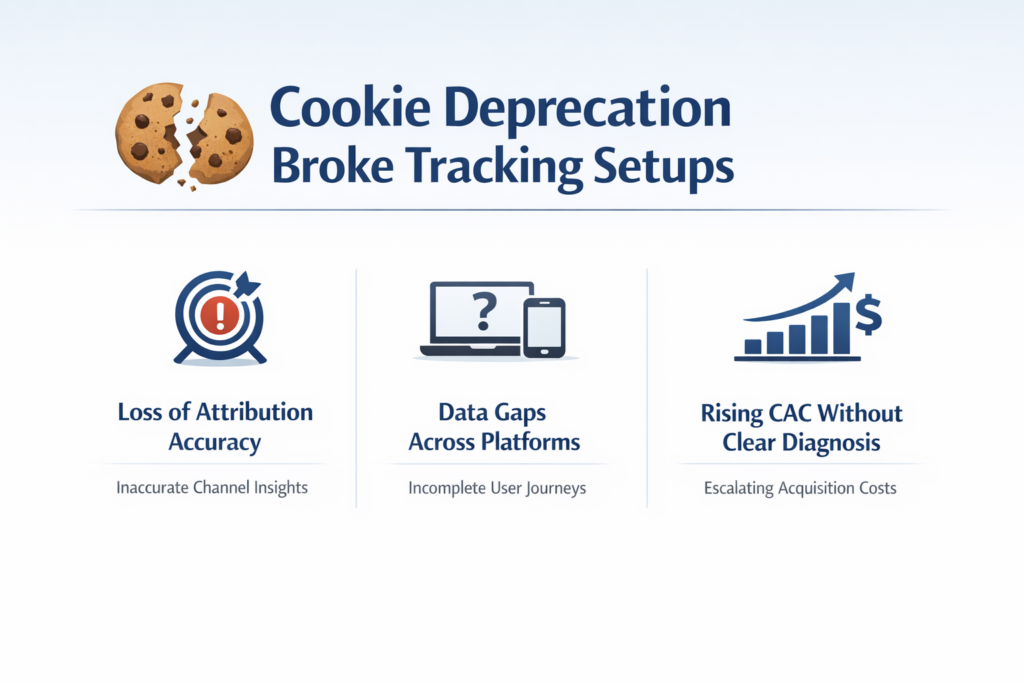
Loss of Attribution Accuracy
Marketers began noticing that conversions no longer matched ad clicks. A sale would happen, but the ad platform wouldn’t receive the signal or would receive it too late. As a result, platforms started under-reporting or over-reporting performance.
Retargeting was hit even harder. Since cookies powered cross-site user recognition, retargeting pools started shrinking, reducing reach and frequency across paid campaigns.
Data Gaps Across Platforms
With cookies blocked, each platform began seeing only a partial view of the user journey. Meta, Google Ads, and GA4 started reporting different conversion numbers for the same campaigns.
This created a major problem: there was no single source of truth for revenue, CAC. Teams spent more time reconciling spreadsheets than making decisions.
Rising CAC Without Clear Diagnosis
As tracking accuracy dropped, ad platforms received weaker optimisation signals. Campaigns began to look inefficient, even when demand hadn’t changed.
Scaling became risky because marketers couldn’t clearly identify what was actually working. Decisions were increasingly made on delayed or incomplete data, leading to higher CAC and slower growth. Source
Why Client-Side Tracking Can’t Be Fixed Anymore
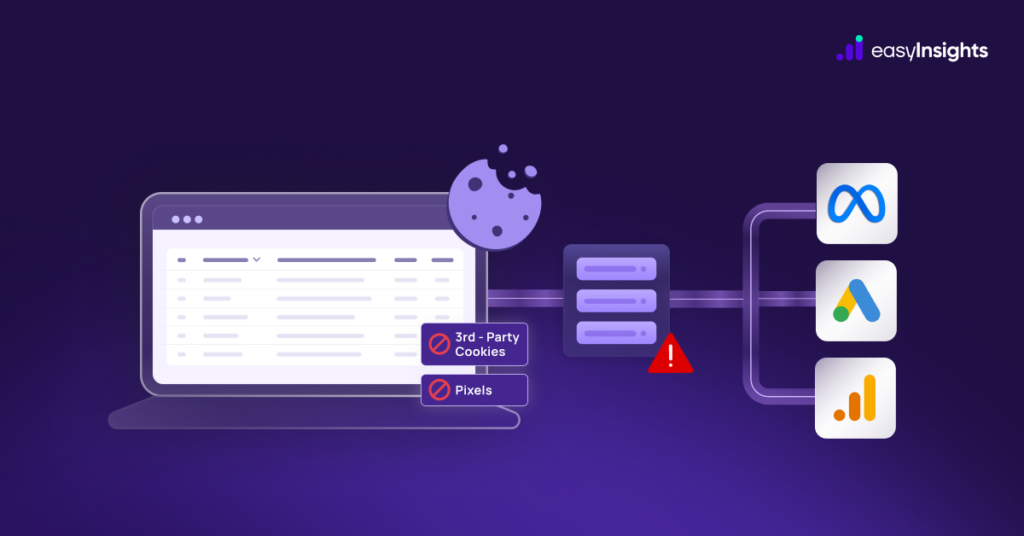
Client-side tracking relies on browser-based scripts and pixels to collect user data. But modern browsers and privacy tools now actively limit how much data these scripts can capture, making traditional tracking unreliable by design.
Ad Blockers
Ad blockers prevent tracking scripts from loading in the browser. When a pixel doesn’t fire, the conversion is never recorded, even though the purchase or lead actually happened.
ITP and Consent Restrictions
Browsers like Safari (ITP) and Firefox (ETP) restrict how long cookies can live and when data can be stored. On top of that, consent banners mean tracking only works if users opt in, further reducing data capture.
JavaScript Failures
Client-side tracking depends on JavaScript executing perfectly. Slow page loads, browser errors, or network issues can stop scripts from firing, leading to missing or delayed events.
The Shift to Server-Side Infrastructure
Server-side tracking changes where and how data is collected. Instead of relying on the user’s browser to send tracking data, events are sent directly from your server to ad platforms and analytics tools. This means:
- Data doesn’t depend on browsers, cookies, or JavaScript
- First-party events replace third-party cookie tracking
- Brands gain more control, reliability, and accuracy over their data
In a privacy-first internet, server-side infrastructure ensures tracking works with browser rules, not against them.
What Server-Side Tracking Fixes
Improved Event Match Quality
Server-side events include stronger first-party identifiers (like hashed emails or phone numbers), helping platforms better match conversions to users.
Better Attribution Windows
Since data is sent directly from the server, attribution remains stable even when cookies expire or browsers restrict tracking.
Stable Conversion Data Despite Browser Changes
Ad blockers, ITP, and JavaScript failures no longer interrupt event delivery, resulting in consistent and trustworthy conversion data.
Server-Side Is Only Step One
Server-side tracking solves a major problem: signal loss. But many teams quickly realise that even after moving server-side, data issues don’t fully disappear.
That’s because server-side improves how data is sent, not how it’s used. Even with server-side infrastructure in place:
- Data remains siloed across ad platforms, analytics tools, and CRMs
- Conversion numbers still differ between Meta, Google Ads, GA4, and internal systems
- Reporting requires manual reconciliation, spreadsheets, and constant cross-checking
To make server-side data truly useful, brands need a layer that connects, cleans, and standardises data across tools, turning raw events into decision-ready metrics.
How EasyInsights Fits Into the New Tracking Stack
Server-side tracking captures better signals. EasyInsights turns those signals into usable data. It sits on top of your server-side setup, connecting, cleaning, and unifying data across tools.
Connecting First-Party & Server-Side Data
EasyInsights pulls data from ad platforms, analytics, and CRMs, then automatically normalises events so metrics stay consistent across sources.
Creating a Single Source of Truth
Get one reliable view of revenue, CAC, without platform-to-platform mismatches or manual reconciliation.
Conclusion
Cookies didn’t break marketing. Fragile, browser-dependent tracking systems did. Cookie deprecation simply exposed how dependent marketing measurement had become on tools that were never built for a privacy-first internet.
As browsers moved to protect user privacy, the rules changed, but the goal stayed the same: accurate, reliable data. Brands that adapt aren’t tracking less; they’re tracking smarter.
The future of marketing measurement belongs to:
- First-party data collected with user consent
- Server-side signals that bypass browser limitations
- Clean, connected data infrastructure that creates a single source of truth
Teams that invest in these foundations gain better attribution, more confident decisions, and sustainable growth regardless of how privacy standards evolve.