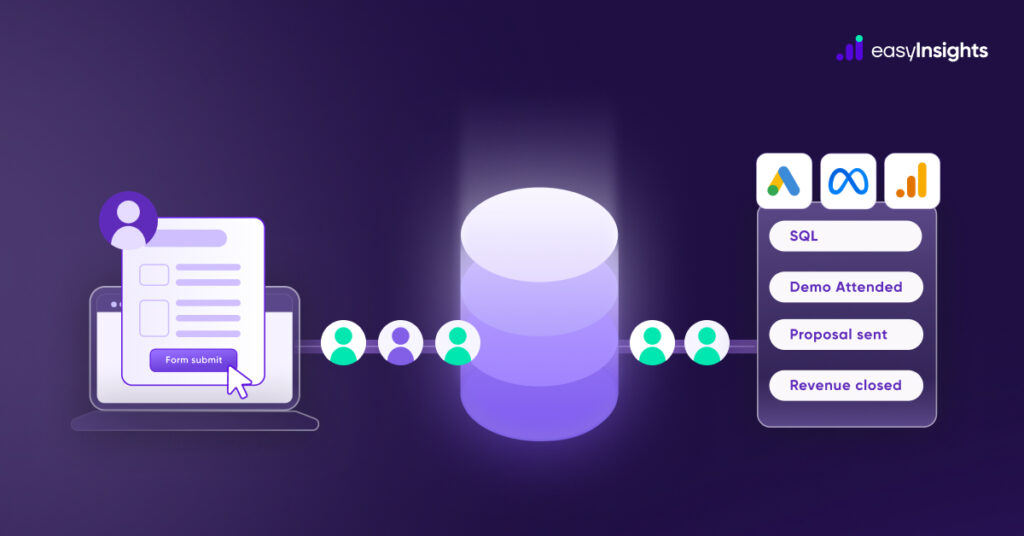
There’s often a clear gap between marketing-generated leads and sales-qualified leads. While marketing celebrates lead numbers, sales struggles with poor-quality prospects that never convert.
The core problem? Ad platforms are being trained on the wrong signals. When you optimise for form submissions, algorithms learn to find people who fill forms – not people who actually buy.
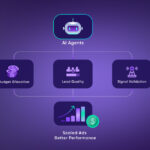
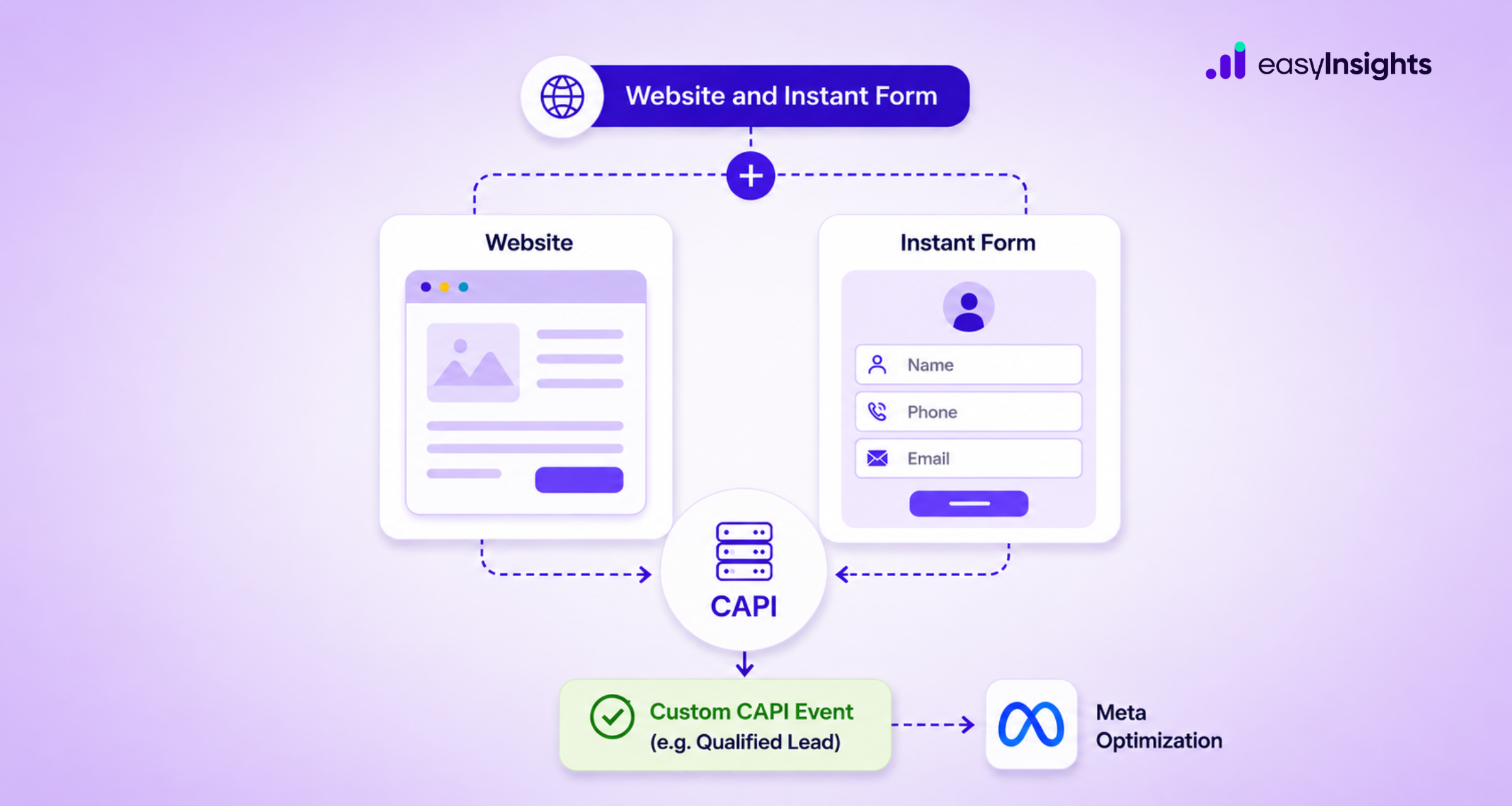
The real performance unlock comes from sending qualified lead signals – like CRM-qualified leads, high-intent actions, or revenue events – back to ad platforms. This helps algorithms optimise for quality, not just quantity.
In this blog, we’ll discuss why optimising for form fills limits growth and how sending qualified lead signals back to ad platforms improves overall performance.
Jump ahead to:
What Are Qualified Lead Signals?
Qualified lead signals are actions or outcomes that show a lead is genuinely likely to become a customer – not just someone who filled out a form.
Instead of tracking basic conversions, these signals reflect real buying intent and sales progress.
Examples of Qualified Lead Signals:
- Sales Qualified Leads (SQLs) – Leads vetted by the sales team as ready for direct follow-up
- Demo Attended – Prospects who actually showed up for a product demo
- High-Intent Pipeline Stage – Leads that move to advanced CRM stages like “Proposal Sent” or “Negotiation”
- Revenue Closed – Leads that convert into paying customers
These signals typically come from your CRM and sales systems – not just your ad platform. When sent back to platforms like Google Ads and Meta Ads, they help algorithms optimise for real brand outcomes instead of just lead volume.
Also read: What Is Lead Grading – And How AI Does It Better Than Rule-Based Scoring
Why Ad Platforms Need Better Signals
Ad platforms optimise based on the signals you send them.
If you optimise for MQLs or simple form fills, the algorithm will find more people likely to complete forms – not necessarily people who will buy.
But when you feed revenue signals, SQLs, or deeper pipeline events back into platforms like Google Ads and Meta Ads, their learning improves.
Better inputs = smarter optimisation.
And smarter optimisation leads to a stronger pipeline and revenue impact.
Poor data quality costs businesses an average of 15–25% of revenue annually.
How Sending Qualified Signals Improves Performance
When you send real sales outcomes back to ad platforms, performance improves in simple but powerful ways:
Better Targeting
Platforms like Google Ads and Meta Ads start finding people similar to your actual customers – not just random form fillers.
Improved Budget Allocation
Your spend automatically shifts toward audiences and campaigns that drive real conversions, not just cheap leads.
Higher Lead-to-Customer Rate
You get fewer low-quality leads and more prospects who are genuinely ready to buy.
Stronger AI Learning
The algorithm learns from revenue and qualified outcomes, making optimisation smarter and more business-focused over time.
How to Send Qualified Signals Back
Sending qualified signals isn’t complicated – it just requires the right setup:
Connect Your CRM with Ad Platforms
Sync your CRM data with platforms like Google Ads and Meta Ads so they can receive real sales outcomes – not just form fills.
Use Offline Conversion Tracking
Upload or automatically sync events like SQLs, demo attendance, and closed deals back into the ad platform.
Feed Pipeline & Revenue Events
Track deeper funnel stages such as “Proposal Sent” or “Deal Won” so optimisation is based on actual buying intent.
Ensure Proper Attribution Setup
Make sure tracking is accurate, and events are mapped correctly, so platforms can match ad clicks to real revenue outcomes.
Common Mistakes to Avoid
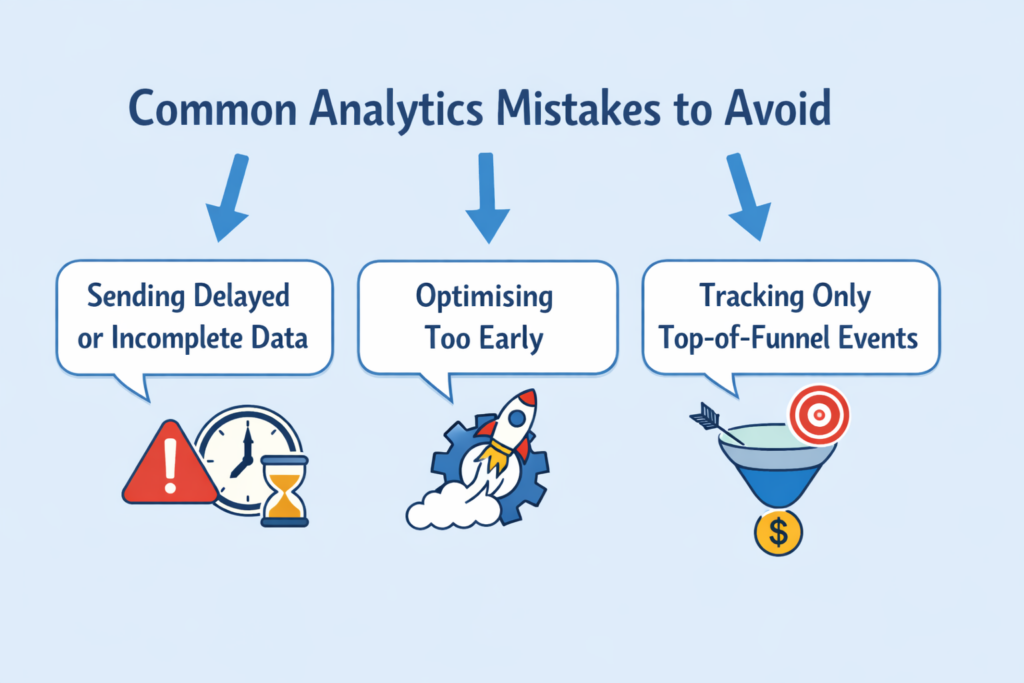
Sending Delayed or Incomplete Data
If platforms like Google Ads and Meta Ads receive outdated or partial CRM data, their optimisation becomes inaccurate. Algorithms need timely, consistent signals to learn properly.
Optimising Too Early
Making changes before enough qualified data is collected can disrupt algorithm learning and reset performance momentum.
Tracking Only Top-of-Funnel Events
If you only track form fills or MQLs, platforms optimise for volume – not revenue. Deeper funnel signals like SQLs or closed deals lead to stronger, business-driven optimisation.
How EasyInsights Helps
EasyInsights helps you move from volume-based optimisation to revenue-driven performance.
- Connects your CRM and sales data with platforms like Google Ads and Meta Ads
- Sends qualified lead signals (SQLs, demo attended, revenue closed) back into ad platforms
- Improves signal accuracy and reduces data gaps
- Strengthens attribution across the funnel
- Helps optimise campaigns based on real business outcomes – not just CPL
EasyInsights ensures ad platforms learn from what actually drives revenue, leading to better targeting, smarter budget allocation.
Conclusion
For years, performance marketers have focused on lowering CPL and increasing lead volume. But more leads don’t always mean more revenue. When you optimise only for form fills or MQLs, you train platforms to chase quantity – not quality.
Revenue-weighted signals change that.
When you send SQLs, pipeline stages, and closed-won data back to platforms like Google Ads and Meta Ads, optimisation shifts from cheap leads to real business outcomes.
Book a demo with EasyInsights!