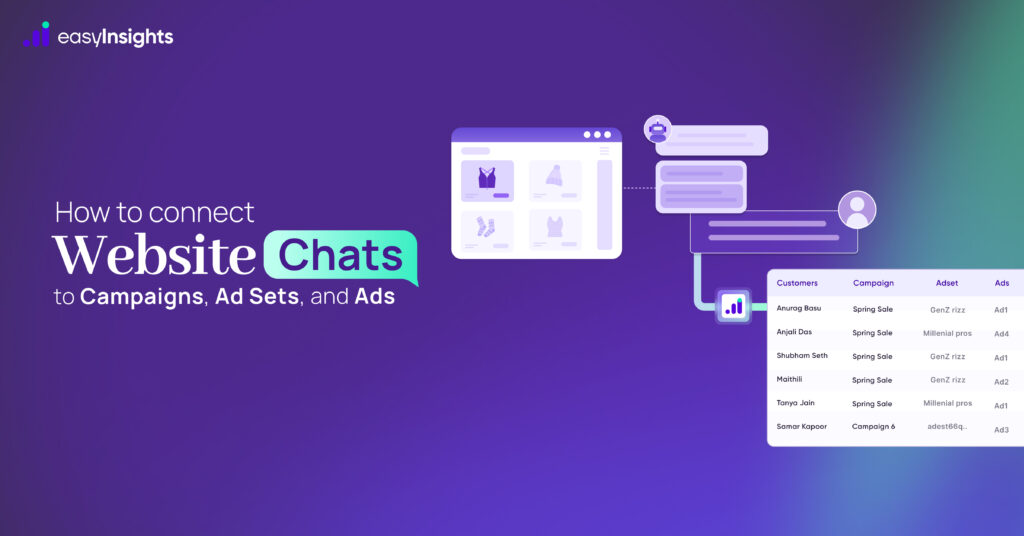
In the modern digital landscape, website chat has become an essential tool for engaging potential customers instantly. Whether it’s answering a quick question or guiding a visitor through a product demo, chats can drive meaningful conversations that lead to sales.
However, one common challenge marketers face is knowing exactly where these chats come from. Was it a Google Ads campaign, a Facebook ad set, or an email marketing link that sparked the conversation? Without this context, it’s hard to identify which campaigns are truly driving high-quality leads and conversions.
This is where EasyInsights comes in – offering a seamless way to stitch website chats back to their marketing source, and simultaneously qualify leads using chat keyword intelligence.
Jump ahead to:
Why Stitching Chats to Campaigns Matters
Most businesses track clicks, impressions, and website traffic but often miss the critical step: connecting real-time conversations to the campaigns that drove them. By bridging this gap, marketers can:
- Measure which campaigns and ads are generating high-intent conversations.
- Identify which traffic sources are producing qualified leads, not just visits.
- Optimize marketing spend based on actual performance, not assumptions.
For example, a campaign might get thousands of clicks, but only a fraction result in meaningful chats that could turn into customers. Without proper attribution, your ROI reporting is incomplete.
Step 1: Capturing UTM Parameters and Click IDs
When a visitor clicks a marketing link, platforms like Google Ads, Meta Ads, LinkedIn Ads, or email campaigns often append UTM parameters to the URL:
- utm_source → the platform (Google, Facebook, LinkedIn)
- utm_medium → the channel (CPC, social, email)
- utm_campaign → the specific campaign name
- utm_adset → the ad set targeting a specific audience
- utm_ad → the exact ad creative
- Optionally, platform-specific click IDs like GCLID (Google Ads) or FBCLID (Meta Ads)
Example:
A Facebook ad targeting a 25–34-year-old lookalike audience might generate this URL:
Capturing these parameters is critical because they serve as the digital fingerprint linking a chat to its source.
Additional reading: A comprehensive guide for UTM Tagging – Google Analytics
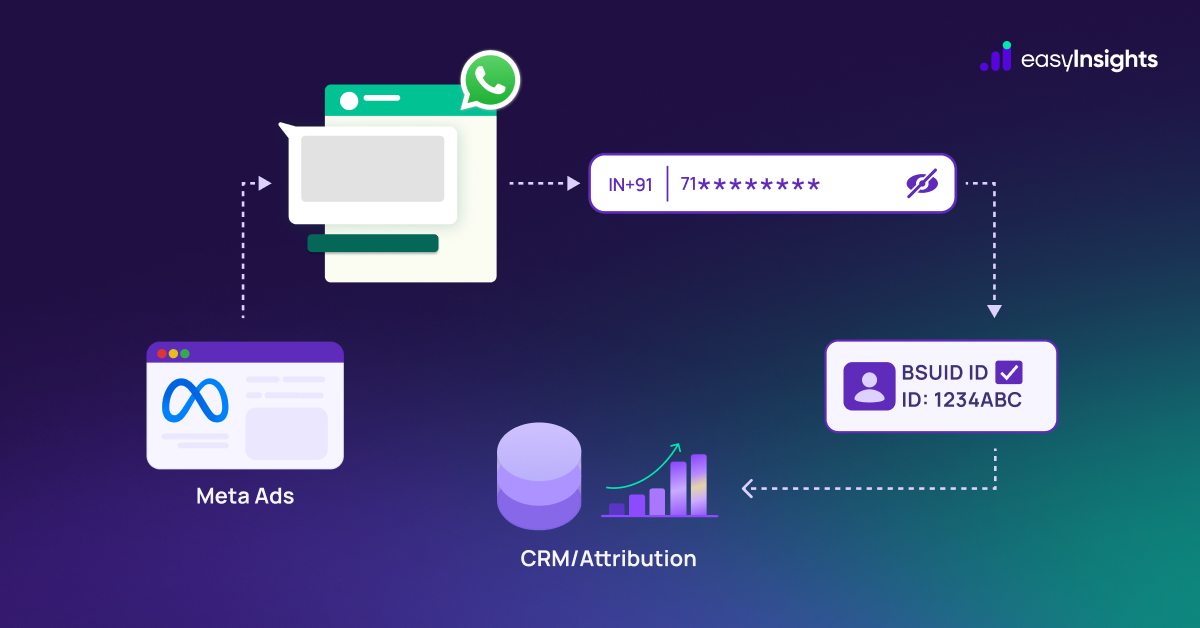
Step 2: Stitching Chat Data via EasyInsights
With UTM and click ID data captured, EasyInsights comes into play:
- Integration with multiple platforms: EasyInsights can pull campaign, ad set, and ad data from Google Ads, Meta Ads, LinkedIn Ads, and other marketing tools.
- Mapping chats to campaigns: Each chat conversation is matched to the corresponding marketing touchpoint.
- Granular reporting: Marketers can now see which campaigns, ad sets, and ads are driving actual conversations rather than just clicks.
Now you can identify:
- Which campaign → led to which chat
- Which ad set → brought the highest-quality chats
- Which ad creative → delivered the best ROI
This allows businesses to make data-driven decisions, rather than guessing which campaigns are effective.
Step 3: Qualifying Leads Through Keyword Intelligence
Not all chats are equal. Some conversations are casual inquiries, while others are sales-ready opportunities. EasyInsights helps separate the two by analyzing chat transcripts for high-intent keywords.
Examples of high-intent keywords:
- “Pricing”
- “Demo”
- “Enterprise plan”
- “Integration with tool”
Chats containing these keywords are flagged as high-quality leads. Conversely, chats focusing on “support,” “issues,” or “refunds” are categorized separately to avoid inflating lead numbers.
This system ensures your sales team focuses on conversations most likely to convert, while marketing teams understand which campaigns attract valuable leads.
Step 4: Feeding Data Back to CRM and Ads Platforms
EasyInsights doesn’t stop at attribution and lead qualification:
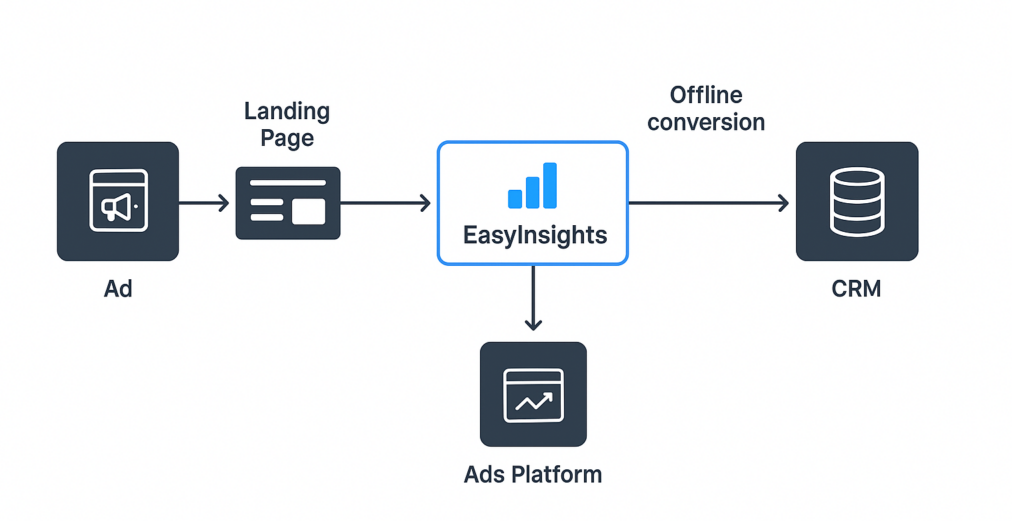
- Qualified chat leads (with source, campaign, ad set, and ad info) can be pushed into your CRM (HubSpot, Salesforce, Zoho, etc.) for follow-up.
- This data can also be sent back to advertising platforms as offline conversions, allowing campaigns to optimize for real conversations rather than clicks.
The result is a closed-loop system where marketing and sales are perfectly aligned, and campaigns are optimized based on actual lead quality from your website chat.
Additional read: How to Send Salesforce Lead Data to Meta & Google Ads
Benefits of Stitching Chats and Qualifying Leads
- Smarter Marketing Decisions
- Identify which campaigns, ad sets, and ads generate high-quality leads.
- Identify which campaigns, ad sets, and ads generate high-quality leads.
- Faster Sales Follow-Up
- Prioritize conversations flagged as high-intent.
- Prioritize conversations flagged as high-intent.
- Accurate ROI Tracking
- Measure marketing performance based on real business outcomes, not just clicks.
- Measure marketing performance based on real business outcomes, not just clicks.
- Better Marketing-Sales Alignment
- Everyone works from the same source-of-truth on lead quality and campaign performance.
- Everyone works from the same source-of-truth on lead quality and campaign performance.
- Optimization of Ad Spend
- Allocate budgets to campaigns and creatives that drive conversations that convert.
- Allocate budgets to campaigns and creatives that drive conversations that convert.
Conclusion
EasyInsights empowers businesses to go beyond traditional click-based metrics by stitching website chats back to their originating campaigns, ad sets, and ads, and qualifying leads using intelligent keyword analysis.
The result is clear: marketers can see which campaigns truly drive meaningful conversations, sales teams can prioritize high-quality leads, and businesses can maximize ROI across every marketing channel.
With EasyInsights, website chat becomes not just a support tool, but a strategic growth engine for marketing and sales.
Book a demo to know more!