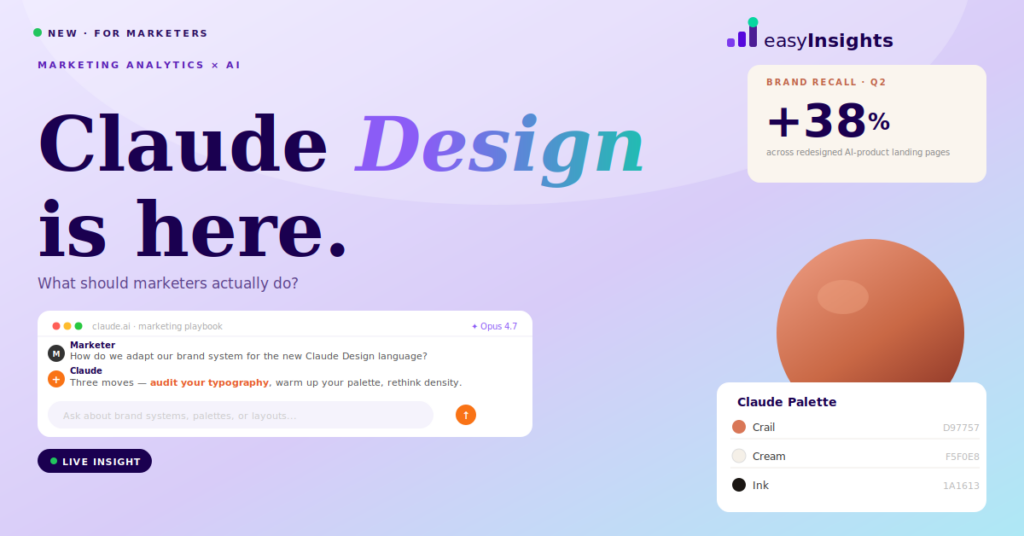
Anthropic launched Claude Design on April 17, 2026. Within days, Figma’s stock dropped 7%, Anthropic’s CPO resigned from Figma’s board, and marketers everywhere started asking one question: Does this change how we work? The honest answer: yes – more than you probably think.
Let’s be real. Every week there’s a new AI tool that promises to change everything. Most of them don’t. Some of them do. Claude Design – Anthropic’s brand-new visual creation product – sits firmly in the second category, especially if you’re a marketer. Here’s why we think that, and here’s what you should actually do about it.
Jump ahead to:
What Is Claude Design, Exactly?
Think of it as a design collaborator you can talk to. You describe what you want – a landing page, a pitch deck, a campaign one-pager, a product prototype – and Claude Design builds a polished first version, right there in your browser. From there, you refine it by chatting, leaving inline comments, or adjusting sliders that Claude generates on the fly for things like spacing, colour, and typography.
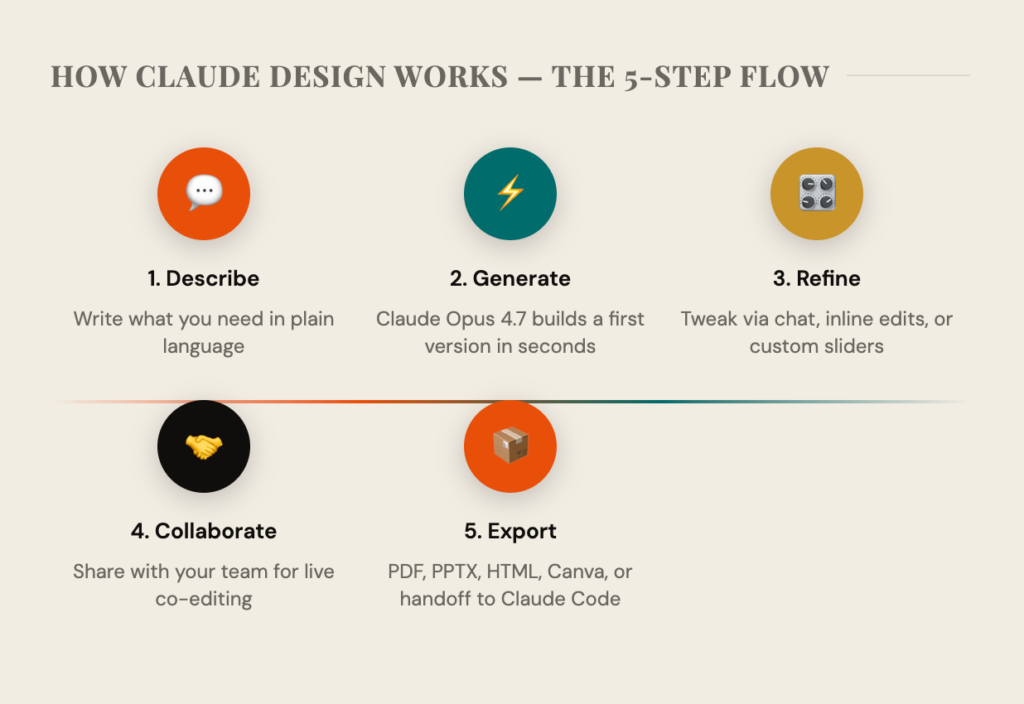
The whole thing is powered by Claude Opus 4.7, Anthropic’s most capable vision model — launched on the same day as Claude Design. It’s currently in research preview for Claude Pro, Max, Team, and Enterprise subscribers at claude.ai/design. No extra charge on top of your existing plan.
| The Killer Feature for Marketers Claude Design reads your existing brand assets – codebase, design files, style guides – and automatically applies your colours, fonts, and components to every new project. No more manually adjusting every asset to match brand guidelines. |
The Numbers That Put This in Context
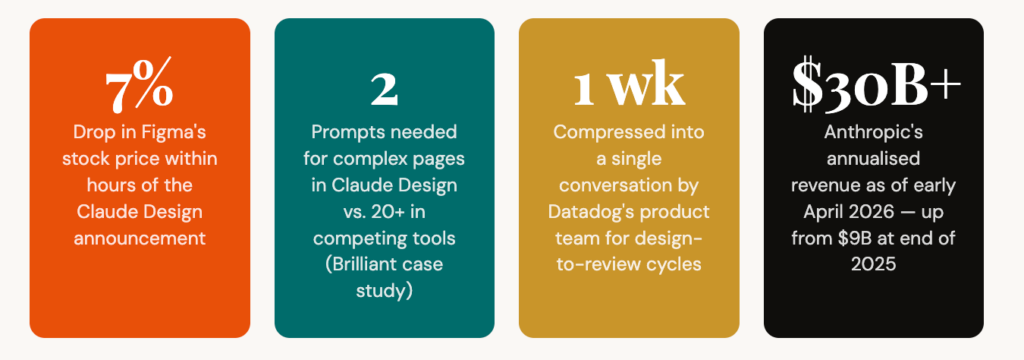
Those aren’t vanity stats. They tell you that this isn’t an experiment by a scrappy startup – it’s a product built by a company with serious momentum, real enterprise customers, and skin in the game. When Datadog compresses a week-long design cycle into one conversation, that’s a signal for every marketing ops person on the planet.
Why This Matters Specifically for Marketers
Designers have been reacting to Claude Design all week. But honestly? The most significant impact might be on marketing teams – because marketers are the ones who have always been stuck in the gap between having a great idea and being able to make it look good.
| Before Claude Design | After Claude Design |
| Write a brief, send to designer, wait 3-5 days for a first draft | Describe the campaign kit, get a first version in under a minute |
| Multiple revision rounds, email chains, scattered feedback | Refine inline via chat until it’s right – real-time iteration |
| Campaign visual kit takes 1-2 weeks from idea to ready | Full campaign visual set in one session using your brand system |
| Every new format (ad, email header, social tile) requires fresh design work | Resize and reformat assets for any channel by asking |
| Off-brand assets sneak in due to unclear guidelines | Brand system auto-applied to every output from day one |
| Landing page takes a designer + developer + 1-2 week sprint | Export HTML landing page directly, or hand off to dev in seconds |
The shift isn’t small. It’s not “we saved two days.” It’s a structural change in how fast a marketing team can move from strategy to something real that stakeholders can react to.
6 Specific Ways Marketers Can Use Claude Design This Week
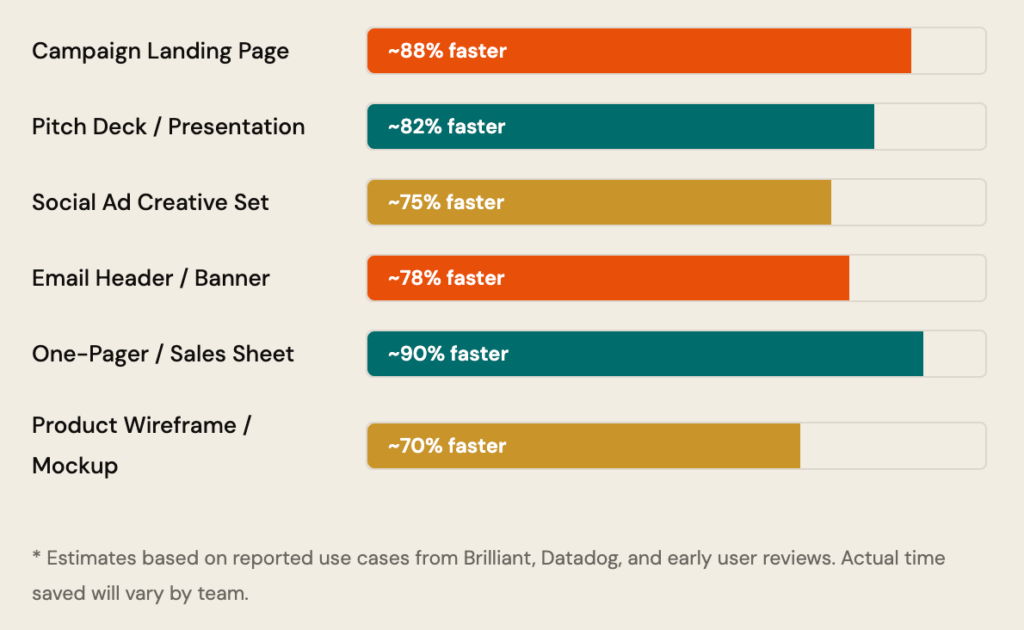
Marketing Use Cases – Time Saved vs. Traditional Workflow
How Does Claude Design Compare to What You’re Already Using?
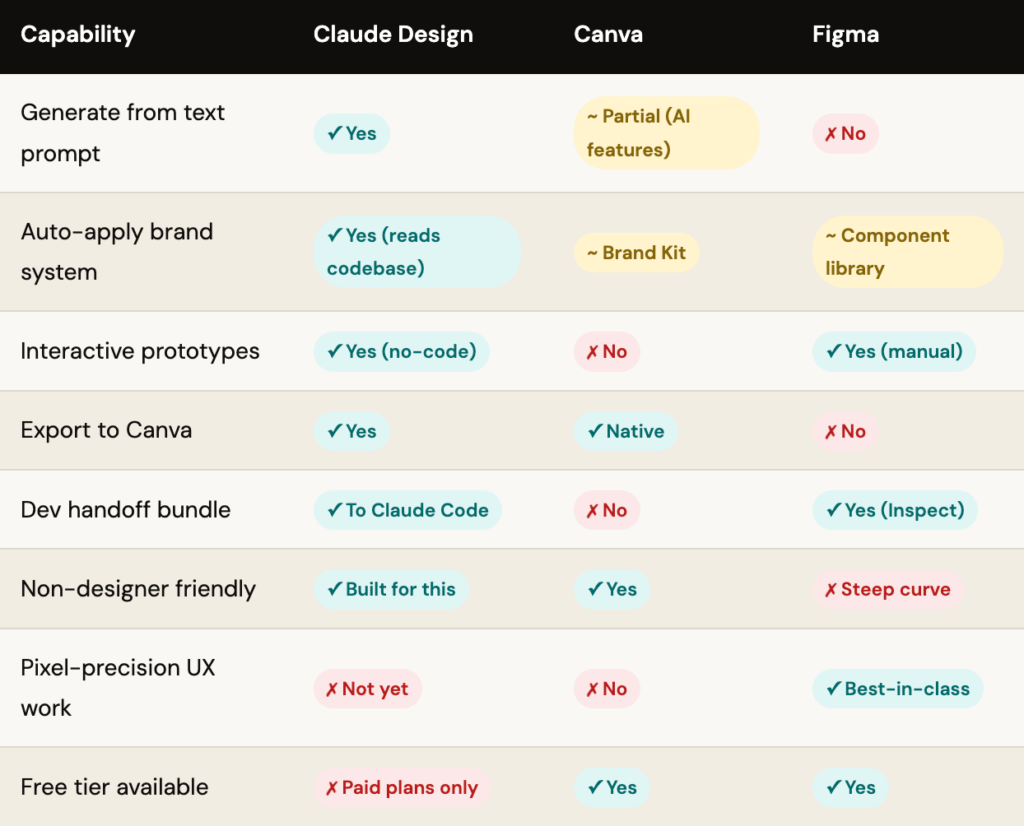
The honest read here: Claude Design is not replacing Figma for your product design team doing deep UX work. It’s not replacing Canva for your social media manager templating posts. What it’s doing is filling a real gap – the early-stage, rapid-iteration, “I have an idea and need it to look like something” phase that marketers live in constantly.
Final Thought
Claude Design is genuinely exciting – not because it’s magic, but because it’s practical. For marketers who have spent years navigating the bottleneck between idea and execution, this is the most direct intervention we’ve seen from an AI company.
It won’t replace your designers. It won’t replace Canva for templated social content, or Figma for production UI work. What it will do is give you back time – the hours spent on briefs, revision cycles, and chasing approvals – and redirect them toward the things that actually move the needle: strategy, testing, and being closer to your customers.
To know more Book a demo Today!