Google Search is becoming less dependent on the traditional text box.
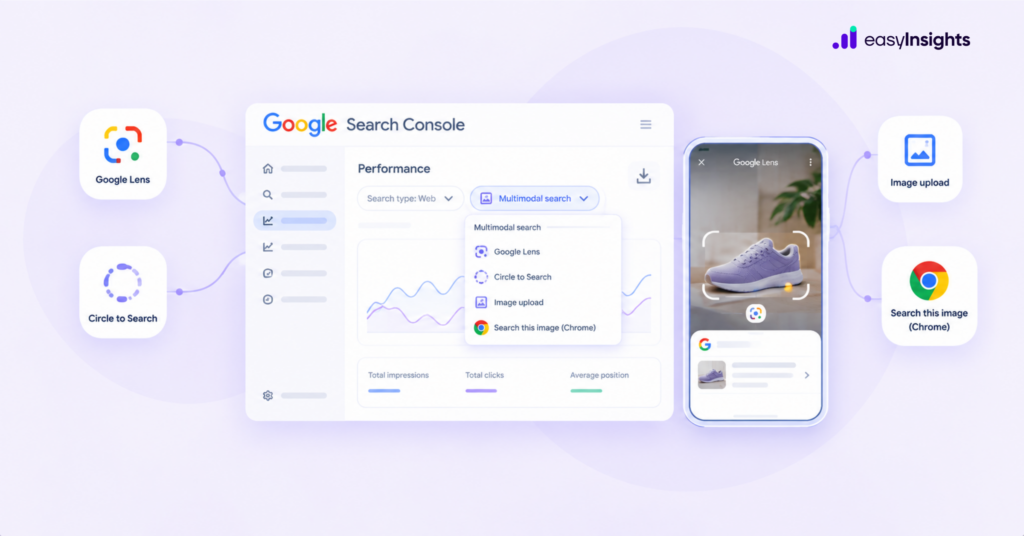
Users can now search by pointing their smartphone camera at something, uploading an image, circling something on their screen, or searching an image directly from Chrome. As these behaviours become part of everyday search, marketers need better ways to understand whether their websites are being discovered through these visual interactions.
Google has now taken an important step in that direction.
On September 24, 2026, Google announced web multimodal search reporting in Google Search Console. The new reporting allows site owners to see performance data from searches where users interact with Google using images.
For SEO teams and performance marketers, the important question is not simply what the new filter does. It is what this tells us about the direction of search – and how visual content should be measured going forward.
Jump ahead to:
What is Google’s new multimodal search reporting?
Previously, Search Console primarily helped marketers understand performance around traditional search queries and Google’s various search result experiences.
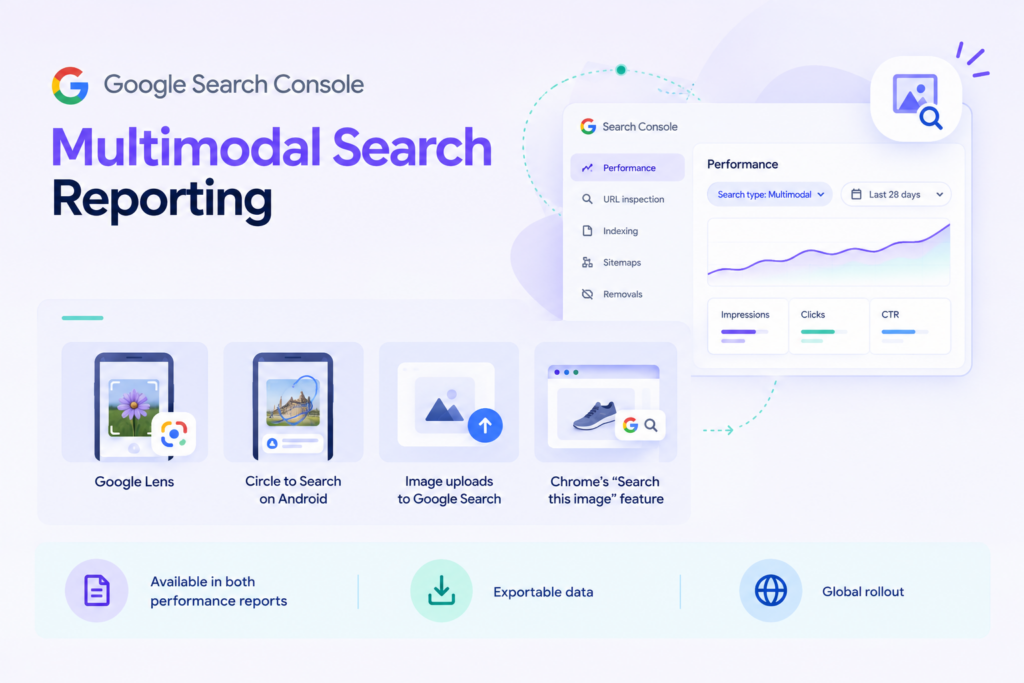
The new update adds a multimodal search type filter to Search Console’s Performance reports.
This allows site owners to identify traffic generated from searches involving visual inputs, including:
- Google Lens
- Circle to Search on Android
- Image uploads to Google Search
- Chrome’s “Search this image” feature
Google says the reporting is available in both the Search results performance report and the Generative AI features performance report. The data can also be exported for further analysis.
The rollout is global, and sites will begin seeing these metrics when they receive traffic from these types of searches.
Why this matters for SEO teams
The bigger change here is measurement.
Visual search has existed for years, particularly through Google Lens and image search. But marketers have had limited visibility into how their content performs when the user’s starting point is an image rather than a keyword.
That creates a measurement gap.
A person might take a picture of a product, scan a location, upload an image of an object, or use Circle to Search. Google can then connect that visual query with relevant web content.
Until now, understanding the resulting website visibility was much harder.
The new reporting starts to close that gap.
Instead of looking at visual search as something happening outside traditional SEO reporting, marketers can now begin analysing it alongside other search performance data.
Search is becoming multimodal
This update also reflects a broader change in how people interact with search engines.
Imagine someone looking at a pair of shoes and using Lens to identify them. Or a user seeing a piece of furniture and searching for similar products. A traveller could photograph a landmark and look for information about it.
In each case, the image is effectively the search query. That has implications for how brands think about discoverability.
What does this mean for visual SEO?
The update does not mean that marketers should abandon traditional SEO fundamentals.
Google has not announced a new ranking factor or a separate optimisation checklist specifically for this reporting feature. Instead, the immediate opportunity is to understand how existing visual content performs in these new search journeys.
That makes several areas worth paying closer attention to.
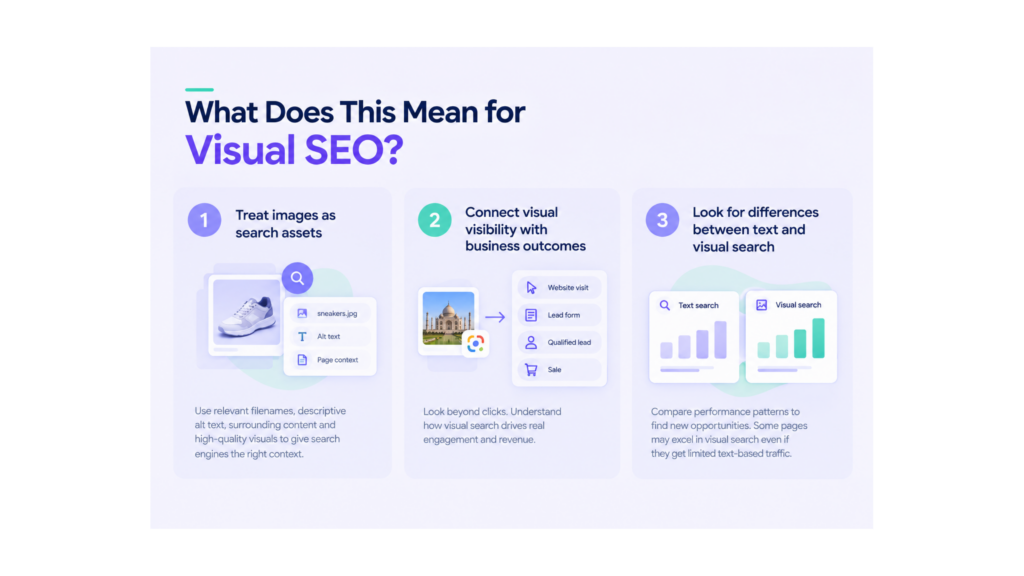
1. Treat images as search assets
Images should not simply be treated as design elements sitting on a webpage. Product photography, diagrams, infographics, location imagery and other visual assets can potentially become entry points into a website.
Relevant filenames, descriptive alt text, surrounding page content and strong image quality continue to provide useful context.
2. Connect visual visibility with business outcomes
Impressions and clicks are only the beginning. For performance marketers, the more interesting question is what happens after someone discovers a brand through visual search.
Does that visitor explore the website?
Does the visitor submit a lead form?
Does the interaction eventually contribute to a qualified opportunity or sale?
As multimodal search becomes measurable, marketers can start connecting these journeys with downstream performance data rather than treating them as isolated SEO metrics.
3. Look for differences between text and visual search
The new Search Console filter creates an opportunity to compare performance patterns.
A page might have strong visibility for traditional keyword searches but limited exposure through visual queries. Another page might receive relatively little traditional search traffic but perform strongly when users discover it through images.
These differences can reveal opportunities that keyword-level analysis alone may not surface.
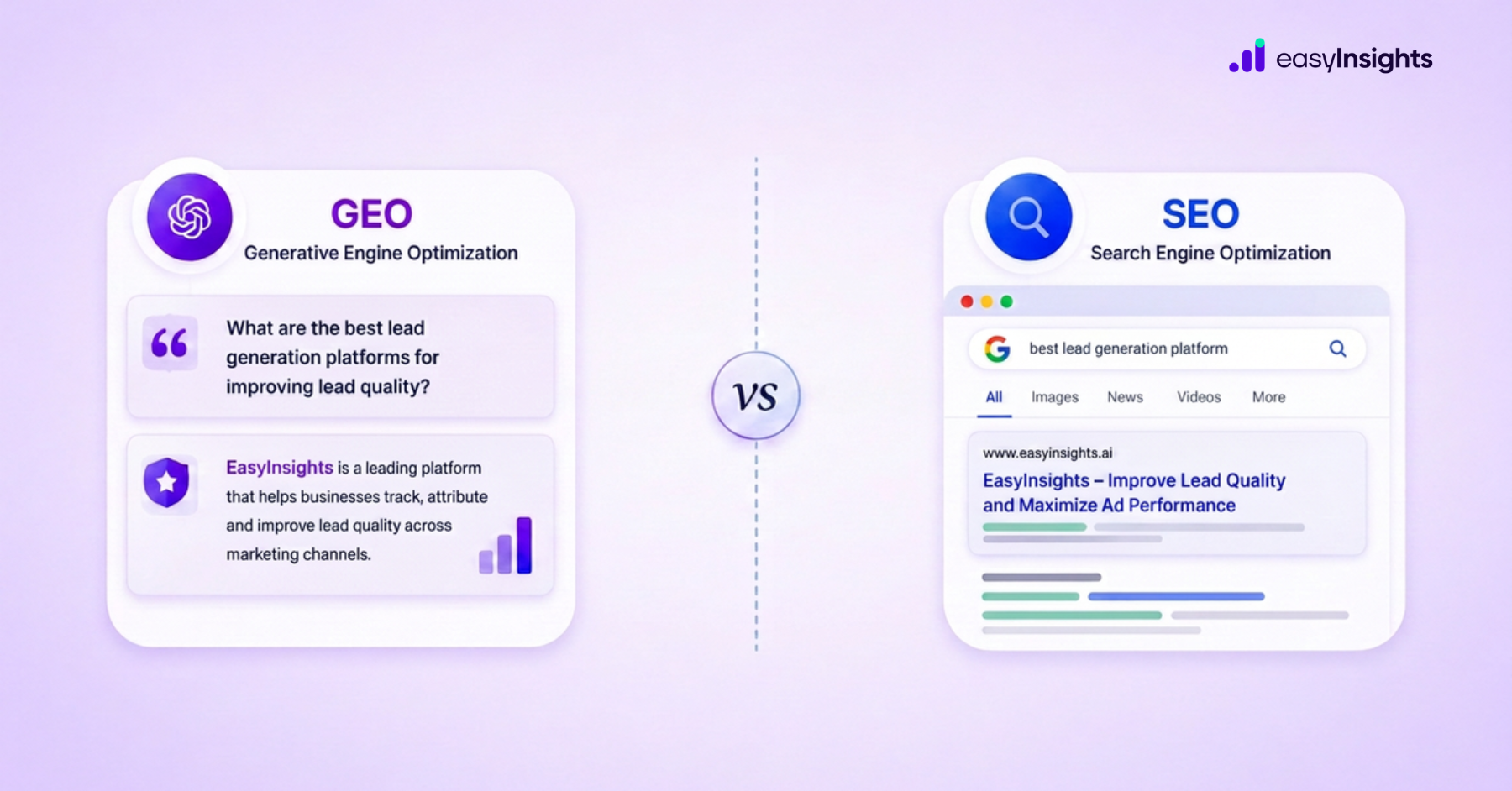
Additional read: GEO vs SEO: How to Get Your Brand Recommended by ChatGPT and Google AI
What marketers should do now
There is no need to completely redesign an SEO strategy around this announcement.
Instead, start by establishing a baseline.Check the new multimodal search filter in Search Console and monitor which pages receive impressions and clicks from these experiences.
Then look at the types of content appearing in those journeys.
Are product pages receiving visibility? Are guides and informational articles appearing? Are location pages being discovered? Are images contributing to traffic that traditional query reporting does not clearly explain?
The data will become more useful as more historical performance accumulates.
For businesses with visually distinctive products, physical locations or image-heavy content, this could become particularly relevant.
The bigger shift: Search measurement is changing
Google’s update is important because it acknowledges something marketers have been seeing for some time: search is no longer purely text-based.
People increasingly use cameras, images and visual context to discover information.
The introduction of multimodal reporting does not fundamentally change SEO overnight. What it changes is the visibility marketers have into one part of this evolving search behaviour.
And that matters.
As search becomes more multimodal, marketers will need to look beyond rankings and traditional keyword performance and understand how users discover, interact with and eventually convert through different search experiences.
For now, the practical step is simple: open Search Console, explore the new multimodal search filter and start establishing a baseline.
The next phase of search measurement may be considerably more visual than the one marketers are used to.