A new toggle inside Ad Sets quietly removes one of the last manual controls advertisers had. Here’s what it really means – and how to use it.
Meta just added a new setting called Customer Lifecycle Strategy inside Ad Sets. It looks like a minor UI change. It isn’t. This is Meta’s clearest signal yet that manual audience targeting is on its way out – and AI is taking the wheel.
If you run performance marketing on Meta, this update deserves your attention right now. Not because it breaks anything you’re doing today, but because it shows exactly where Meta is heading – and how you need to adapt before you’re left behind.
Jump ahead to:
What Is the Customer Lifecycle Strategy Setting?
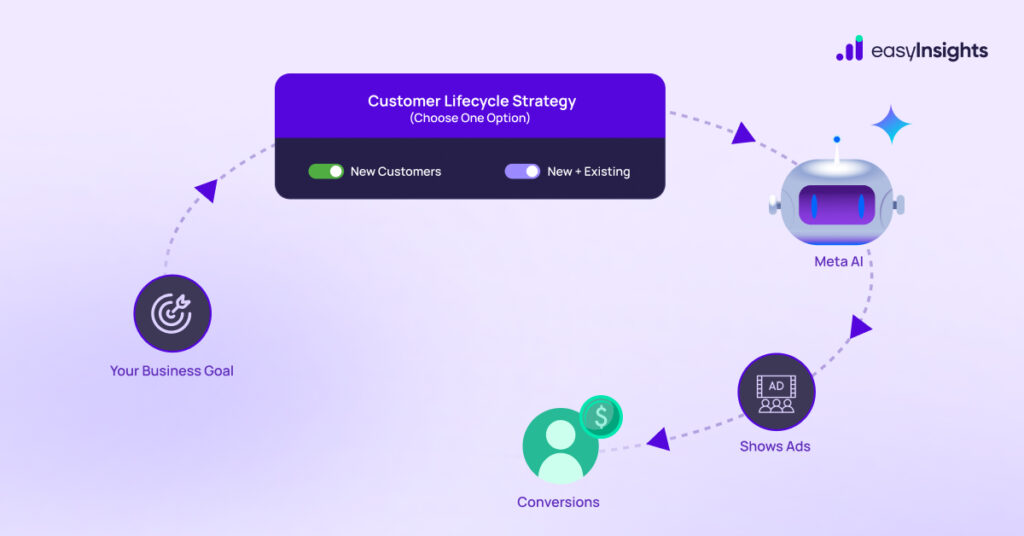
Inside Meta Ads Manager, within your Ad Set configuration, there is now a new option: Customer Lifecycle Strategy. You choose between two modes:
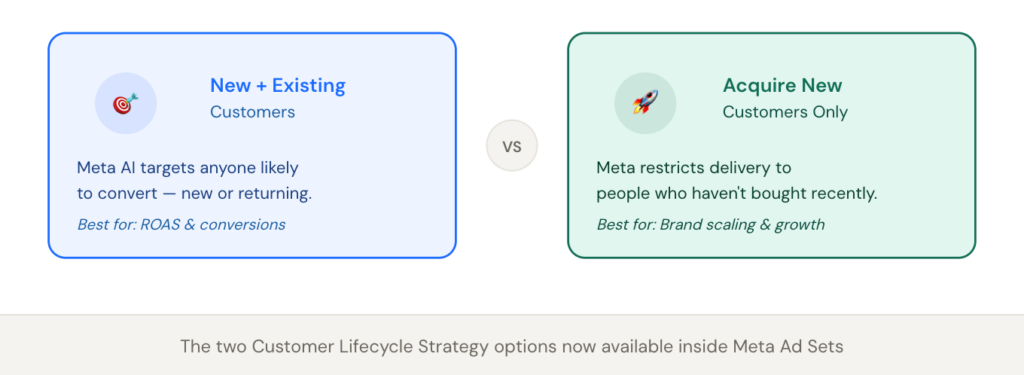
That’s it. Two choices. No audience selectors, no lookalike percentages, no retargeting rules. You state a goal – and Meta’s AI figures out who to show your ads to.
| How “New Customer” is defined Meta defines a “new customer” as someone who has not purchased from your business in the last 180 days. This is based on your pixel data, conversions API, and customer list uploads – so the quality of your first-party data directly affects how well this setting works. |
Why This Is a Bigger Deal Than It Looks
To understand why this matters, you need to see it in the context of everything Meta has been doing over the past three years. This isn’t a random new feature – it’s the next step in a very deliberate strategy.
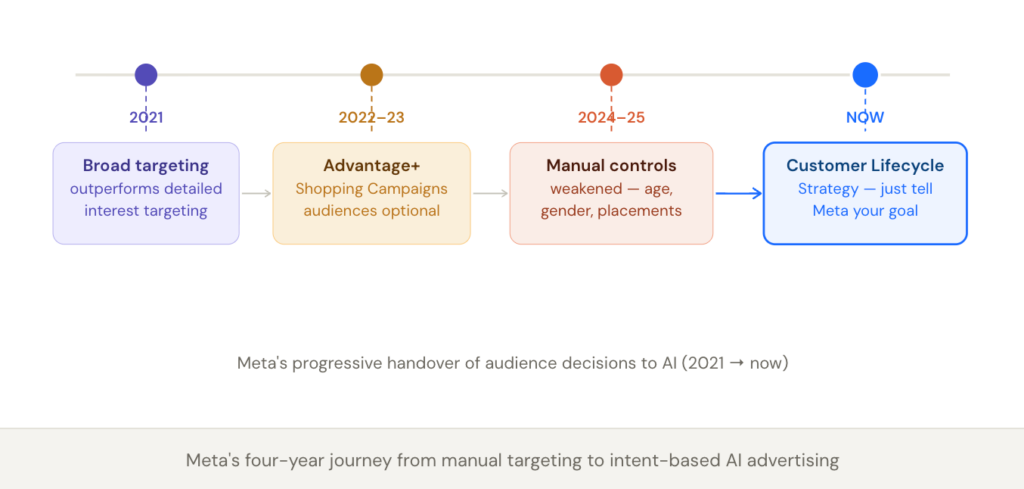
Each step has removed one more dial from your dashboard. The Customer Lifecycle Strategy setting removes the last meaningful audience dial – who sees your ads. What’s left is why you want them to see it.
When to Use Each Option
Here’s the practical breakdown based on what we’re seeing in early tests:
| Your Goal | Best Option | Why |
| Maximise ROAS short-term | New + Existing | Larger pool for AI to optimise from, including high-intent returning customers |
| Lower CPA quickly | New + Existing | Repeat buyers are cheaper to convert – AI will naturally lean toward them |
| Scale brand reach | New Only | Prevents AI from padding results with easy repeat purchases |
| Reduce CAC dependency | New Only | Forces growth through genuine acquisition, not re-engagement |
| You’re not sure yet | Test both | Run separate campaigns and compare CPA, ROAS, and new customer % over 2-4 weeks |
| Watch out for this If you choose New + Existing and most of your conversions are coming from existing customers, your ROAS will look great – but your business isn’t actually growing. Always track new customer % alongside ROAS to see the full picture. |
How to Test This Properly
The right way to evaluate these two settings is with a clean A/B campaign structure – not a broad test mixed in with other variables.
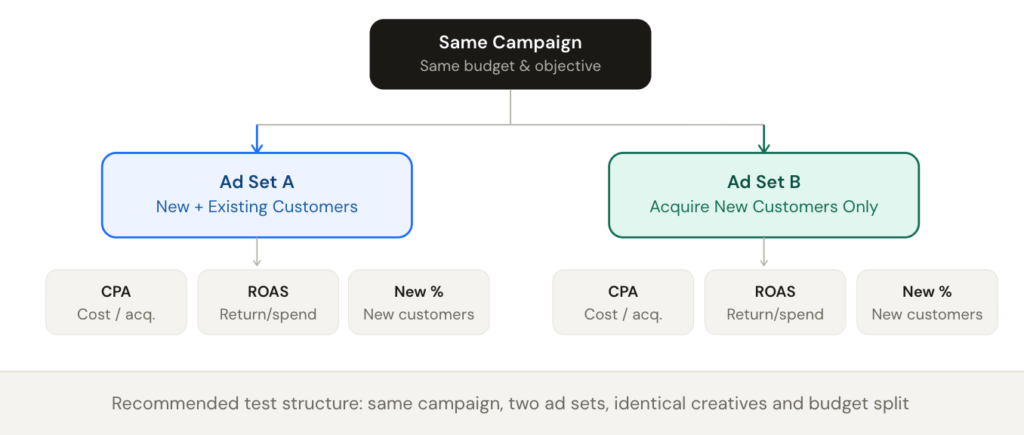
Run this test for at least 2 – 4 weeks before drawing conclusions. Meta’s algorithm needs time to exit the learning phase. The three metrics you’re comparing are:
→ CPA – Which setting is acquiring customers more efficiently?
→ ROAS – Which is driving more revenue per ad dollar?
→ New customer % – Is your spend actually reaching new people, or just re-engaging existing ones?
| Pro tip Keep everything else identical between the two ad sets – same creative, same budget split, same bid strategy. If you change multiple variables, you won’t know what’s driving the difference in results. |
The Bigger Picture: What Advertisers Need to Adapt To
This update isn’t just about a new dropdown. It’s the latest evidence that the skills which made advertisers successful five years ago – building custom audiences, layering interest segments, testing lookalike percentages – are becoming less relevant.
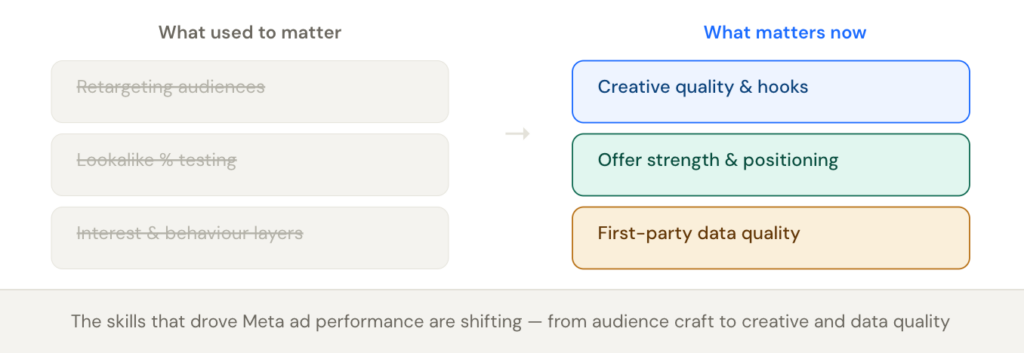
Here’s what actually drives results in the AI-first Meta ads era:
Creative quality – Your hook, format, and storytelling now do the targeting work. The algorithm amplifies what resonates; you need to give it something worth amplifying.
Offer strength – The deal itself has to be compelling enough to convert cold audiences. A strong creative with a weak offer still loses.
First-party data – Your customer list and pixel data directly influence how Meta’s AI defines “new” vs “existing” and who it treats as a qualified prospect. Poor data = poor targeting.
Speed of creative iteration – Instead of testing audiences, you’re testing creative angles. The faster your production cycle, the more you learn.
Additional Reading: Why Meta Loves First Party Data
Final Thoughts
Meta’s direction is clear. They’re building an advertising system where you set a goal and write a check – and the machine does the rest. That’s not inherently bad. It lowers the floor for new advertisers and reduces the time tax of audience management.
But it also means the competitive edge shifts entirely to what you put into the system. The best creative, the most compelling offer, the cleanest data, and the clearest understanding of your customer economics. That’s where the game is played now.
| We help performance marketing teams connect their ad data across platforms, track incrementality, and make faster decisions. If you’re running Meta ads at scale and want better visibility into new vs existing customer performance, Explore what EasyInsights can do for you. |