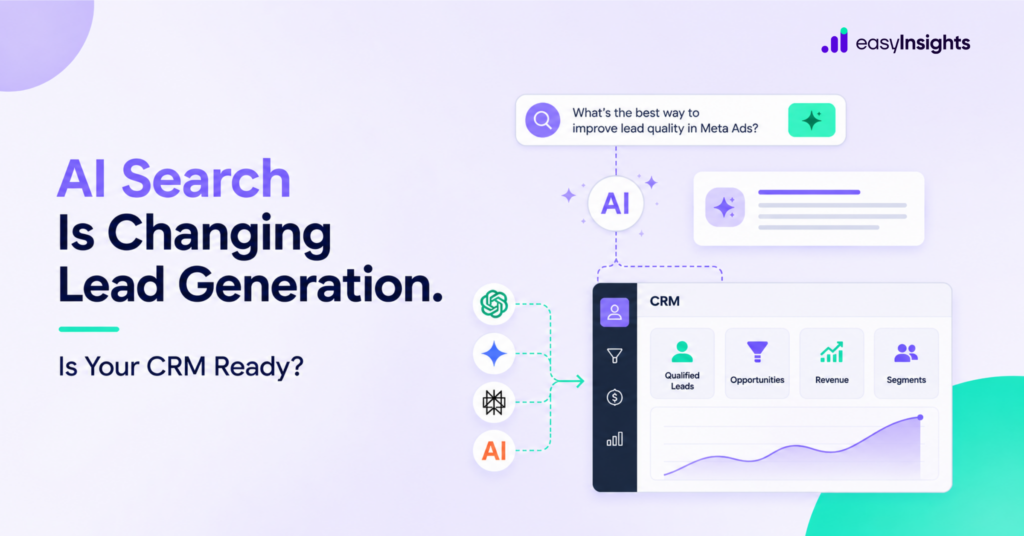
For years, performance marketing has been built around one assumption: the customer journey starts with a search engine. A prospect searches on Google, visits multiple websites, compares solutions, reads reviews, and eventually fills out a form or books a demo.
That journey is changing.
Today, buyers are increasingly asking ChatGPT, Gemini, Claude, and Perplexity for recommendations before they ever visit a website. AI is becoming the first touchpoint in the buying process, and it’s compressing the traditional research journey.
For performance marketers, this isn’t just another traffic source. It changes how leads are generated, measured, and optimized.
The question is no longer, “How do I rank on Google?”
It’s becoming, “ How do I make AI recommend my business – and how do I measure the quality of those leads? “
Jump ahead to:
The Customer Journey Is Being Rewritten
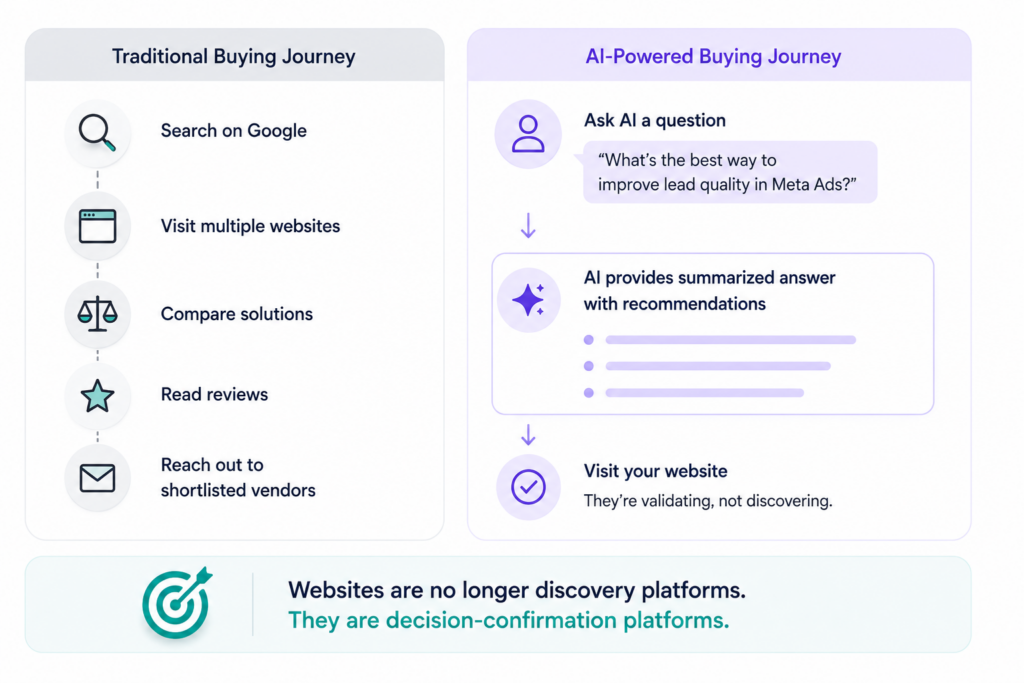
The traditional buying journey was predictable. A prospect searched on Google, visited multiple websites, compared solutions, read reviews, and then reached out to a few shortlisted vendors.
Today, AI is eliminating much of that research.
A marketer can simply ask:
“What’s the best way to improve lead quality in Meta Ads?”
Instead of opening ten browser tabs, they receive a summarized answer with recommendations in seconds.
By the time they visit your website, they’re no longer discovering your business – they’re validating whether you’re the right choice. This shift means websites are becoming decision-confirmation platforms rather than discovery platforms.
AI Traffic Is Different From Traditional Search Traffic
Not every visitor arrives with the same intent. Someone searching broadly on Google may still be exploring.
Someone coming from an AI assistant has often already:
- Defined their problem.
- Compared multiple solutions.
- Understood key differences.
- Shortlisted a few vendors.
That means AI-driven visitors often arrive with significantly higher purchase intent.
As AI adoption grows, marketers should stop looking at AI as just another referral channel. It represents a fundamentally different stage of the buying journey.
Your CRM Becomes More Important Than Ever
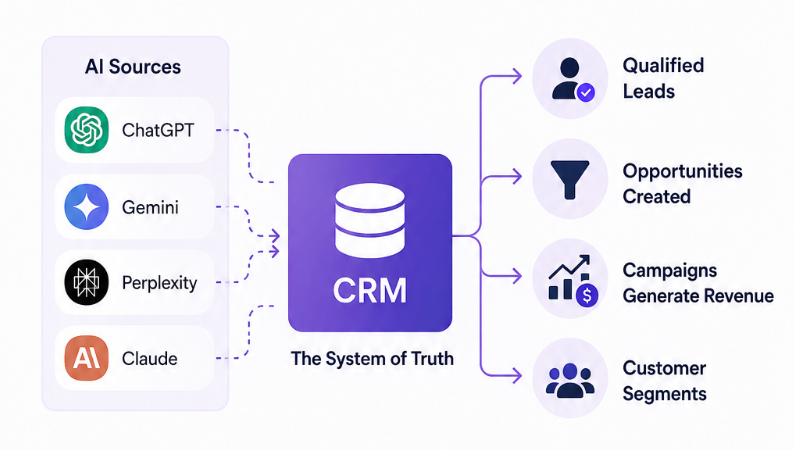
As AI compresses the customer journey, the role of the CRM becomes significantly more important.
Your CRM is no longer just a database for sales teams.
It becomes the system that tells you:
- Which AI sources generate qualified leads.
- Which leads convert into opportunities.
- Which campaigns generate revenue.
- Which customer segments AI visitors belong to.
Without this data, every AI visitor looks exactly the same inside your analytics platform.
And that’s a missed optimization opportunity.
AI Is Also Changing SEO
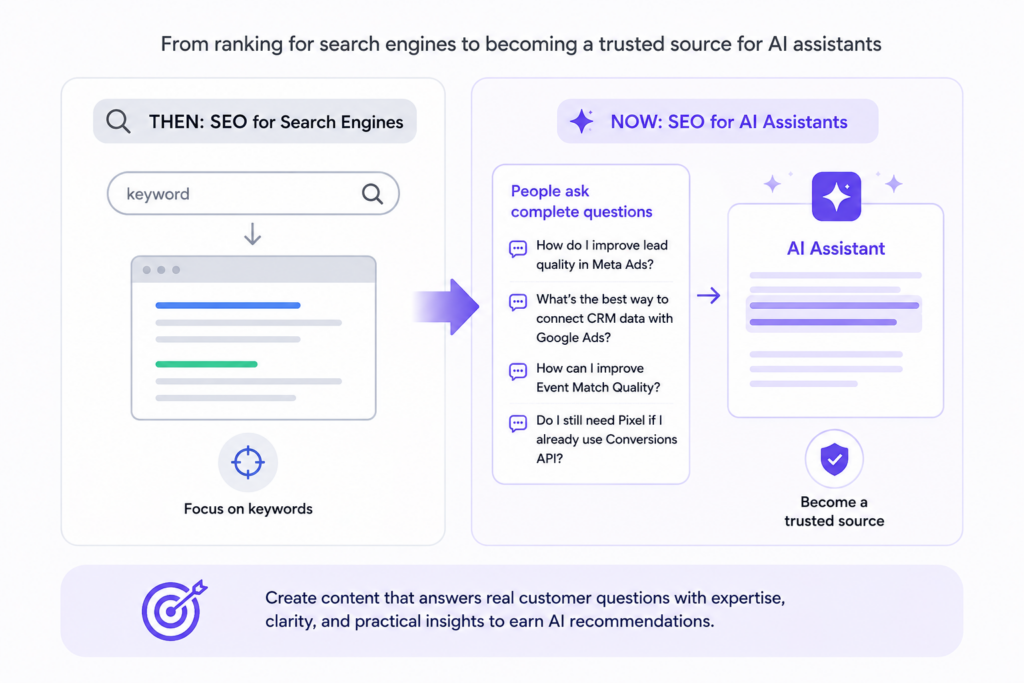
For years, SEO meant optimizing for search engines. Now it also means becoming a trusted source for AI assistants. People are no longer searching only with keywords.
They’re asking complete questions.
Examples include:
- How do I improve lead quality in Meta Ads?
- What’s the best way to connect CRM data with Google Ads?
- How can I improve Event Match Quality?
- Do I still need Pixel if I already use Conversions API?
This shift changes how content should be created.
Instead of writing for search volume alone, brands should focus on answering real customer questions with expertise, clarity, and practical insights.
The brands that consistently educate their market are more likely to become part of AI-generated recommendations.
Also read: 7 Best Practices for Organic SEO in 2023
What Performance Marketers Should Focus On Next
As AI continues to reshape discovery, every performance marketing team should be asking a new set of questions:
- Can we identify traffic coming from AI platforms?
- Are we measuring lead quality instead of just lead volume?
- Is our CRM connected to our advertising platforms?
- Are qualified conversions flowing back into Meta and Google?
- Are we optimizing campaigns based on revenue instead of CPL alone?
These questions will become increasingly important as AI adoption accelerates.
How EasyInsights Helps
AI may bring high-intent visitors, but traffic alone doesn’t drive growth. What matters is knowing which visitors become qualified leads and customers.
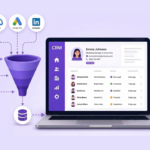
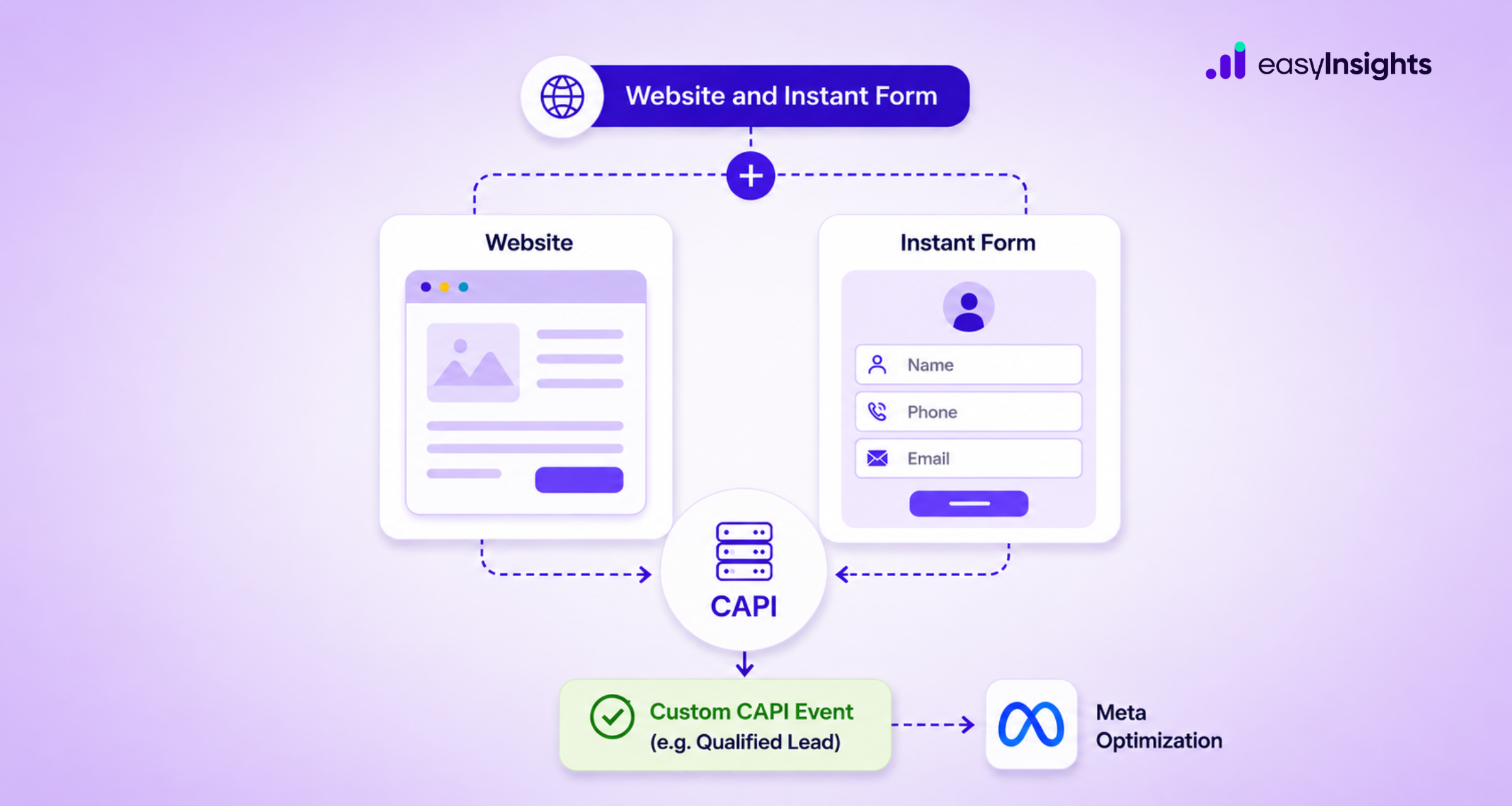
EasyInsights connects your CRM with Meta and Google, sending qualified leads, sales stages, and revenue events back to your ad platforms. This helps campaigns optimize for real business outcomes – not just form fills.
As AI-driven discovery grows, first-party CRM data becomes your biggest competitive advantage. EasyInsights ensures every valuable conversion signal is captured, measured, and used to improve campaign performance.
The Future Belongs to Marketers Who Own Their Data
AI isn’t replacing search. It’s changing where the customer journey begins. As more buyers rely on ChatGPT, Gemini, Perplexity, and other AI assistants to discover solutions, performance marketers need to rethink how they measure success.
Generating traffic will become easier.
Understanding which visitors become customers – and using that intelligence to improve future campaign performance – will become the real competitive advantage.
The brands that succeed won’t just be visible in AI search. They’ll have the infrastructure to capture first-party data, connect CRM outcomes with advertising platforms, and continuously optimize campaigns based on revenue instead of assumptions.
| Connect your CRM with ad platforms to get quality lead – Book a demo |